Fusion.

Den Za Den - ''Den Za Den''{Yugoslavia}[1977]@256(vinyl rip)
This Yugoslavian obscurity could easily have been outtakes from the second or third Iceberg album, the pulling together of extreme virtuosos on keys, guitar, drums, and bass to perform a pyrotechnic jazz rock of great vigor.

The album has great production for that time, but, unfortunately, that time was the boom of punk and new wave, so the band stopped very quickly after recording this album.
Great Album!

Den Za Den - Svadba:
L'Orchestre Sympathique - ''En Concert a La Grande Passe''{Canada} [1973]
L’OS (as they are frequently known) is a group that has roots into such ancient bands as Lasting Weep (early 70’s and where Maneige also originated) but for some reason never managed to secure a recording deal. So sick of this situation that they decided to produce their own album themselves by organizing a concert where the entrance fee gave you the right to a copy of the album once it was released. Their contempt for the recording industry is well shown by depicting the Grammophon label and the famous His Master’s Voice spoof cover. And on the inside sleeve was marked all of the co- producers of the album, most namely the name of everyone that attended the concerts (4 in all)>> this was certainly an original way to get their album done.

And what an album this baby is!!! Clearly this debut album certainly rivals with Maneige’s best works both in their early style of les porches and the later style of Libre Service. Citronnade (lemonade) is an amazing showcase for François Ricard’s flute talents and Vanasse’s superb Vibe playing. Houmalaya is the first part of their fabled Tibetan philosopher (you get plenty of far-eastern influences) and this track alone was worth the price of admission to the concert: grandiose!! Even the obligatory drum solo is good and certainly not overstaying its welcome. Their jazz-rock is always on the verge of classical, ethnic, jazz and rock music >> true fusion if I ever heard it.

The second wax slice side is more of that superb same and is a feast for your ears. Lacs is a scorching beauty, with Vanasse’s vibes taking the cake with Richard’s flute being the icing. Stolow’s funky-jazz bass is also at the forefront on this track. At the halfway mark of the track, they suddenly drop a stunningly quiet interlude sounding like the Swiss quartet Circus on Movin’ On’s Dawn, before suddenly picking up again: awesome is the word. Vanasse’s playing is reminiscent of Circus Fritz Hauser. Perpetual Balouba is a very moody track traveling up and down the chilled-out spine – this track will get a much harder treatment in their following album. The album is closing on the absolutely delightful Biplane.

Certainly one of the more stunning debut album in jazz-rock around that tilme, this album is simply a must, especially if you love Maneige’s best works. This album got a recent released by the excellent label ProgQuebec and strongly deserves encouragement by you buying this incredible album.(reviewed by Hugues Chantraine)

National Health - ''Of Queues and Cures''{UK}[1979]@260VBR
Reduced to a quartet, the lineup is nearly identical to Hatfield but for bassist/vocalist John Greaves (ex-Henry Cow), filling the Richard Sinclair role (he even sounds a bit like him on “Binoculars”).

Musically, this is a whole other animal from Hatfield, even if it’s clearly built on the same foundation. I find it amusing that Stewart left due to complaints that the music had come too close to “jazz fusion”, as this is by far the most orchestrated National Health album, with brass, woodwinds and cellos imparting dense symphonic textures to pretty much all the tracks.

For me, this is the apex, the pinnacle of all things Canterbury. There’s not a wasted moment on the entire disc, and the guys were really at the top of their game here. Well done!(reviewed by...)
Of Queues and Cures is currently held as the third best record ever (of 53,000 candidate records) on the Gnosis web site.

Of Queues and Cures is one of my top 5 albums.

National Health - Square for Maud:

Links in comments.

Eskaton - ''4 Visions'' {France} [1979] @320 (Zeuhl)

To put simply, it's a mind blower. The most obvious comparison would be to fellow Frenchmen Magma. (magma's music: Wagner-esque grandeur with Eastern European rhythms and melodies, Germanic-like chanting (keep in mind that MAGMA sang in a made-up language), and almost ritual-like repetition. (slowly building grooves to a frenzy) In fact, imagine Magma with much of the superfluous stuff stripped away, less experimental, with French female vocals, and perhaps a more accessible, consistently ass kicking approach, and you might have a good idea of what Eskaton sounds like. Indeed, taken on a purely musical level, it rivals the best of Magma's classic middle period. Of course, it doesn't have that same ground breaking experimental attitude, and the originality factor could certainly play into the individual mileage of any listener. Still, I'd have a hard time believing any Magma fan who didn't at least dig the album on a visceral level. I mean, the record smokes from beginning to end. There are no weak moments at all throughout the album, no filler. Pop it in, turn it up, and simply revel in growling bass, crushing drum rhythms and utterly intense synthesizer flourishes. The band builds into explosive, thundering climaxes that literally send shivers up and down my spine. The lead vocalists certainly help differentiate Eskaton from their influences. All the lyrics are in French, and a male counterpoint a la Klaus Basquiz is absent. Both female vocalists are tremendous however, though I have a hard time differentiating between the two. Their eerily melodic contributions factor heavily throughout all of the album's compositions.

The opening of "Attente", with its thick synthesizer riff, just before the band falls into thundering march with a chant of "Soleil!", has to be one of my favorite moments. "Ecoute" has bass riffs so menacing, and a climax so overpowering that it drove my colleague Mike Prete to "prog orgasm", as he so eloquently put it. "Le Cri" changes the pace of things at the very end of the album, slowing things down and presenting a fantastic extended synthesizer solo. Mesmerizing.(reviewed by Greg Northrup.)

Eskaton - Eskaton:

Link in comments.

ProgNotFrog Radio Presents: The Voice of The Moon #017 With The Herbalist (Another Mix of Celestial Music, Mixed with the spoken thoughts of a madman)

This week we avoided working around any particular musical subject on purpose. We'll do this from time to time because it is important to free-associate music from different places and different moments, so our Ariadne's Thread this week will be just intuition and mood.

Anyway, I have chosen a bunch of great songs that I think that the public of this show (yes, that's you) deserve to listen to.

Starting with the expriment done by Jocelyn Pook for the most disturbing scene of the movie "Eyes Wide Open" to the inner world of Patrick Wolf, an incredibly interesting young singer author from Great Britain.

We'll also listen to the cinematic musical puzzles of Mr. Stan Ridgeway, followed by the exquisite voice of Anja Garbarek and the spacey and trippy sounds of Spiritualized, among several other surprises.

There's o0ne thing, though, that I will ask of you. I'd like to get some more comments and suggestions. I see that dozens of people download the show every week but I barely get any comment, or critic. After al,l I do this show for all of you and some feedback would be great. I'd really like to know how many followers this show has and I am eager to listen to suggestions to make more people get hooked to The Voice of The Moon.

Meanwhile, enjoy and as usual,

Keep Listening...!!!


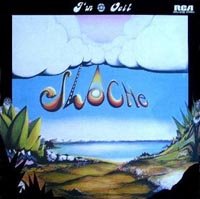
Sloche - ''J'un Oeil'' {Canada} [1975] @320 (Jazz Rock/Fusion)

This stunning group from mid-Northern Quebec is yet another one of relatively unknown groups that help Quebec’s progressive rock revolution in the 70’s. Mainly an instrumental jazz-rock group, but when actually using their vocal powers (both in scatting and in actual singing) , they actually reached peaks of beauty that makes you regret this quintet did not sing more.Their music tends to be a bit more bombastic that their aforementioned fellows, while keeping a similar fusion-oriented vein as Maneige; meanwhile, the dual keyboard layers provide a symphonic feel every now and then. The fusion facet is clearly influenced by Return to Forever and Weather Report, albeit less pompous than the former and a more uplifting than the latter. I observe some Kerry Minnear and George Duke influences on both keyboardists, but generally speaking, it must be stated that Sloche never gets derivative. The optimistic spirit that is generally spread all throughout “J’un Oeil” allows the complex compositions receive a certain air of catchiness, and also gives a frontal freshness to the musicians’ intricate interplaying - structural sophistication and warmth, all at once. These guys were incredibly tight-playing and were obviously well collaborating with each other as the songwriting is fairly well-shared (a track each except for drummer Chiasson giving space to bassist Hebert a second track) and the sound is still quite up to date some 30 years later.

As equally superb (but vastly different at will also) as Maneige, Conventum or Opus-5, Sloche is one of those groups that must be investigate by every proghead, dead ort alive. Astounding and outstanding.

Sloche - C'Pas Fin De Monde:

Sloche - Algebrique:

Link in comment.

Parzival - ''Legend'' {Germany} [1971] @256 (Prog. folk)

One of the keenest Folk Prog group to come from Germany, Parzival should appeal to most progheads especially those looking into medieval music as a main influence. Organized around a guitar-bass-drums trio (the bassist being multi- instrumentalist from KB to violin) with an added instruments ranging from the cello, flute to the oboe.

It isn't acid /psych folk music as the compositions offered by other germans as Emtidi, Carol Of Harvest but it is very closed to Ougenweide and their Pagan, traditional folk. The result can (mentaly) lead you to have the feeling that you go back to the past. Each track of the album has its very special mood, sometimes written in a plaintive tone (the delicious Wall Bungalow accompagned fo the piano, the pastoral song Empty land), epic (Marshy legend), dark & melodic. Despite that the instrumentation is essentialy acoustic and the "roots" are in traditionnal folk music, a few rock ingredients are mixed with the ensemble, creating original musical sequences and progressive harmonies.

This album is not at all basic folk music and really defines what prog folk is. Moreover it is made in a very emotional mood, the musical qualities are always present in favor of fixing the attention of the listener. A deep musical journey in the past! It can easily be conceived as the legendary adentures of Parzival put into music!

Parzival - Empty Land:

Link in comment.

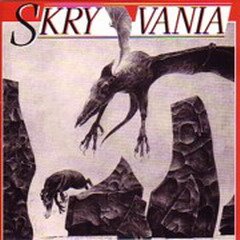
Skryvania - ''Skryvania'' {France} [1978] @192 (prog rock)

Back in the mid 70s, the almost fully instrumental quartet Skryvania came from the union of a bunch of French teenage prog-heads - still in high school - who wanted to emulate their musical idols: Yes, Genesis, Pink Floyd. While doing their first gigs as a prog cover band, they started to create their own ideas, and by the end of 1977 they had enough original material to fill a long-play: by that time, original keyboardist Henry-Jean Aubin had been replaced by Harold Bazobka. Their low budget didn’t allow them to have the benefit of a solidly professional recording studio, although a famous local radio presenter and sound engineer was in charge of the production of the band’s sole recording. Maybe this was the factor that helped the resulting record to sound the best it could under these circumstances. The band’s obscure status was very much due to the fact that the album’s promotion was almost inexistent: the foursome’s inexperience led them to focus exclusively on playing gigs without leaving some room for promotion in radio programs or magazines. All in all, the sound quality is not terrible (compared with the demo selection of early Corte Dei Miracoli material in “Dimensione Onirica” or Arachnoid’s album), and it doesn’t prevent the listener from appreciating the level of compositional inventiveness and.. read more here.

keep listening & links in comments..

rAid..

R.I.P Marek Grechuta (Polish singer,composer,poet...)

dni,których nie znamy..


You can download anawa - korowod('71) from here.

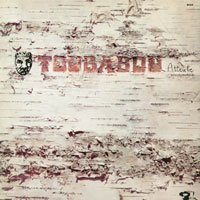
Toubabou - ''Attente'' {Canada} [1975] @192 (fusion/afro rock)

Toubabou was formed in 1974 when percussionist Michel Séguin and vocalist Lise Cousineau, founding members of Ville Emard Blues Band (VEBB), were asked by the Québec government to organize the final concert of the Superfrancofête youth festival, on the Plains of Abraham in Québec City. Séguin and Cousineau had ties to French African musicians with whom they had played in 1973. These same musicians had given Séguin the title "Toubabou-djembe-folla" (bambara expression meaning "stranger playing skins"). They invited several artists from Mali and Senegal (including the renowned Doudou N'Diaye Rose) to join them for a show combining traditional African music with adaptations and original compositions by Toubabou. Others VEBB members completed the group, including Robert Stanley (guitar), Michel Dion (bass), Yvan Ouellet (keyboards), and Denis Farmer (drums). On August 24, 1974 this event was recorded on two-track reel-to-reel tape before 55,000 spectators. From these tapes, Toubabou released a live album in November of that year, entitled "Le Blé et le Mil". The album includes somewhat raw live versions of two instrumentals to be featured on the band's subsequent studio album, as well as "Yama Nekh", a VEBB favorite. A highlight is the opening track "Oasis", a sublime 10-minute voyage skillfully navigating between '70s cool jazz and FM radio rock. ... read more here

j'fReAk AssEz..

Keep Listening & Links in comments..

Prog Not Frog Radio Presents: The Voice of The Moon #016, With The Herbalist (Covers: renditions, reinterpretations & reconstructions)

In 1844 Dr Henry Jekill invented a potion that was able to transform him into another man, a man deeply different to him in every possible way.

More than a century popular musicians used a similar process. One band can become another totally different band. Monsters of all kind started to appear everywhere in the sonic spectra.

Today's show is about covers. The magic of transformation. The art of rebuilding a song.

There are many way of covering a song. Some try to keep things safe and go for the fully respectful cover or even the blatant copy. They are the ones that use similar instrumentation and try to mantain the original mood of the song.

Others prefer to throw in a personal touch to the covered songs or add "their band's style to the original style".

In other cases covers become the result of a complex process of deconstruction and total reconstruction of a song.

As you can see there are no simple rules. And the results of the Art of Covering are never guaranteed. I must say that, sadly, in most cases, covers are no better than the original, (and I must also admit that in many cases the results are awful), but it must be said also that getting a better song is not always the cover's goal. Sometimes a song is covered just for the fun of playing it, or as a tribute done out of pure admiration, with no pretentions at all.

I love covers. I believe that even in the worst cases, it is always interesting to listen to the consequences of the travel of one band's song into the realm of another one.

This show is dedicated to those happy interactions.

I hope you like the selection.

Enjoy, be well, and...

Keep Listening...!!!


Magma - ''Live/Hhaï (Köhntark)'' {France} [1975] @ 192 (Zeuhl)

This is probably their most accessible work, as it is their most 'fusion sounding work' with extremely strong soloing from violinist Didier Lockwood, but it in no way compromises their vision.

The music of this album is actually atypical for what many remember the band: martial, relentless rhythm stomps, operatic howling, bombastic horn races. Here, they expose more fully than on any previous release their jazz-rock backgrounds, and subtle, masterful musicality. The first disc is mainly comprised of one of their great long works, Kohntarkosz. Beginning with the cry, "Hamatai!", the band launches an epic with many movements, colors, and moods. Perhaps most surprising is their ease with flowing, impressionistic soundscapes. Vander has stated that when artists in the mid-70s (such as Mike Oldfield) began to borrow his ideas, he was forced to come with a new type of music. Kohntarkosz was the fruit if his new labors, and the version on this album is definitive. Great melodic, eclectic prog, with hints of fusion as well.

Track listing:

Zünd 1 (40:09)
1. Köhntark (Part One) (15:45)
2. Könntark (Part Two) (16:14)
3. Ëmëhntëht-Rê (Announcement) (8:10)

Zünd 2 (46:02)
1. Hhaï (9:20)
2. Kobah (6:36)
3. Lïhns (4:55)
4. Da Zeuhl Wortz Mekanïk (6:14)
5. Mëkanïk Zaïn (18:57)

Magma - Mekanik Zain:

Link in comment. Enjoy!

Various Artits – Peter and The Wolf {UK} [1976] @256 (Classical-Jazz-Prog Crossover Extravaganza)

The idea of recording a Sergei Prokofiev’s Peter and The Wolf rock version was developed by clarinet player Jack Lancaster and keyboard player Robin Lumley around 1976. Lumley and Lancaster had belong to a band called “Soul Searchers” which later would become the fusion act Brand X. Peter and the wolf is the first of two albums that Lancaster and Lumley released together (the second is Marscape from 1977)

The goal with Peter and The Wolf, was to make a version of this musical fairytale that could appeal to younger audiences.

To achieve this plan the followed Prokofiev’s original idea of assigning each instrument a role inside the frame of the tale of Peter, the hero that saves the day by hunting down a horrible wolf that threatened his village.

In the original version, for example, we had the duck represented by an oboe, but here the oboe is substituted by Chris Spedding dizzying wah-wah electric guitar. The wolf itself is re-created by Brain Eno and his menacing synthesizers. The hunters become rock drummers.

To make things clear let’s check the incredible line-up of this album:

Narration Viv Stanshall (The same guy that presented the instruments in the original Tubular Bells)
Peter. Manfred Mann (keyboards)
Bird Gary Brooker (synths)
Duck : Chris Spedding & Gary Moore (guitar)
Cat: Stephan Grapelli (Violin)
Wolf (eno (synths)
Pond : Keith Tippett (Piano)
Grandfather: Jack Lancaster (clarinet)
Hunters and Villagers: Phill Collins, Bill Bruford, Cozy Powell, Jon Heisman, Alvin Lee, Julie Tippett and the English Chorale.

Most of the songs are Prokofiev original score, subtly and smartly arranged by Lancaster and Lumley. The rest are original songs inspired in the classic work. Obviously this is the typical over ambitious album that many rabid critics of progressive rock tend to hate.

And yes, it was very pretentious but it had indeed some great moments. Listen carefully to the “cat” bluesy and jazzy dance and you’ll understand what I mean.

Although Peter and The Wolf is part of the agonic years of Classic Progressive Rock, it is nonetheless and album that shouldn’t be missed in any serious collection.

And hey… it is pretentious yes, but let’s not forget that it is also a child’s tale, so it is also funny and fresh, with a nice happy ending.

Enjoy it and...

Keep Listening…!!!


From Peter and The Wolf - Cat Dance...

MIA - ''Cornonstipicum'' {Argentina} [1978] @256 (Symphonic prog.)

Independent Musicians Associated (MIA) was a group of musicians, technicians and drawers gathered together by Lito and Liliana Vitale's parents. They produced their own records and concerts in an independent way. Their music is a complex symphonic rock with definite Argentinean/latin folk influence with multiple corals and vocals beautifully contrasting with the keyboards and a great guitar sound upon a strong rhythmic section.

The increase of the musical energy functions as a crucial factor for this album’s impressive caliber, although it retains much of the bucolic flavour that had clearly appeared two albums; it’s just that this album’s repertoire goes to far more places. Meanwhile, Lito Vitale’s role on keyboard becomes more prominent in the mix, and that means that the multicolored sonic sources that the band so majestically combines in their prog style are given an extra intensity thanks to the augmentation of the orchestral feel in many passages of “Cornonstipicum”. The symphonic stuff sounds more grandiose than ever, the jazzy sections sound more exuberant than ever, and the weird stuff receives an air of magical flamboyance – this is a very powerful album, indeed, one of those gems from faraway countries that could make the day for sensible prog collectors. (reviewed by Cesar Inca)

MIA were a unique musical ensemble with a definite progressive ethic.

MIA - Cornonstipicum:

Link in comment. Enjoy!