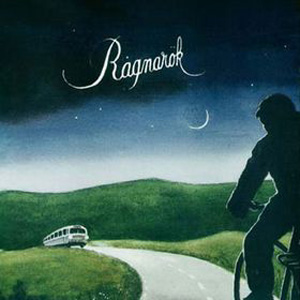
Ragnarök - "Ragnarök" {Sweden} [1976] (Prog)

Not to be confused with the New Zealand symphonic prog group from those very same years (that should belong in the site soon) or the Heavy Metal unit from the 80-90's, these Swedes managed four albums on Silence Record and some more (not listed here) in the early 90's. They are a typical example of atmospheric and melancholic prog like only Sweden can produce them. Their first album is a real classic known as a minor classic among progheads and they will participate to another group (KUNG TUNG - much harder) before doing their second album where those influences from that group will leave a mark. It is reputed to be as good as their debut. The later albums listed here remain of a good standard. Among the non-listed albums is "Well"(91) and is rather new age and sometimes industrial - not much to do with the earlier works. http://www.progarchives.com/Progressive_rock_discography_BAND.asp?band_id=1078


Swedish band that combine folk, fusion and symphonic prog. Bits of King Crimson, Gong and other Scandinavian bands can be pointed to has possible influences, but Raganrok don't really sound like any of the above overall. They take a very pastoral approach to fusion/prog, eschewing high-tech studio trickery, using just pianos, gently tolling electric guitars, flute, bass and percussion. The first album is beautiful mood music, great to drift off with at night. Fjarilar i Magen surprises everyone with its leading track: "Adrenalin". True to its name, it's a metallic hunk of blazing guitar that nearly makes King Crimson's Red look tame. The rest of the album is much more subtle, but in its own way is more like "Adrenalin" than the first album. All right, that's taking the analogy a bit far, but the band do inject more intense passages neatly interwoven among the gentle fantasias. Overall, probably better than the first. -- Mike Ohman

One of the first concerts I saw in my life was with Ragnarok, and I recall that I liked it. Nevertheless it's not a band I'm overly enthusiastic over. I've got one album. Pleasant listening, and although not cliche-ridden, like much other instrumental music a bit anonymous.

Fairly well known Scandinavian band with several albums to their credit. for the latest album Well, they are down to a trio of woodwinds, drums and keyboards, and have assumed a more low-key new agey feel to their music, while still remaining provocative and inspired.

Absolutely brilliant LP [Ragnarok from '76] from Swedish jazzy, folk-progsters Ragnorok. A beautiful LP full of great instrumental pieces all dominated by an acoustical setting and chilled out jazzy electric pianos. Track Two "Promenader" is incredible, a lovely Mahavishnu like Rhodes piano but with a Scandinavian twist (like Bo Hansson) erupts into a Frippian sustained Guitar riff. It really needs to be heard to be believed. The whole LP is instrumental and rightly so as vocals would have taken away its purity. It's hard to try and find other bands who are similar as Ragnarok are so original. "Dagarnas Skum" is an 8-minute jazz folk beauty complete with prog-ish flute. It reminds me of British folk guitar genius Davy Graham or Bert Jansch. I suppose the best similarity would be fellow Swede Bo Hansson but this is wide of the mark really as Hansson was basically a one-man show where as Ragnarok were a band of veritable virtuosos. Really I have never heard such a genius blend of pastoral prog rock, folk and jazz, a truly awe-inspiring record. BUY IT!!! -- David Abel http://www.gepr.net/rafram.html


1. Farvel Köpenhamn / Goodbye Copenhagen (2:30)
2. Promenader / Walks (4:40)
3. Nybakat Bröd / Freshbaked Bread (3:01)
4. Dagarnas Skum / Foam Of The Days (8:07)
5. Polska Fran Kalmar / Reel From Kalmar (0:46)
6. Fabriksfunky / Factoryfunk (4:49)
7. Tatanga Mani (4:34)
8. Fiottot (1:23)
9. Stiltje-Uppbrott / Calm-Breaking Up (4:21)
10. Vattenpussar / Pools Of Water (4:08)


Line-up
- Lars Peter Sörensson / drums
- Stefan Ohlsson / drums, guitar
- Peder Nabo / flute, guitar
- Staffan Strindberg / electric bass
- Peter Bryngelsson / guitars
- Henrik Strindberg / electric guitar, flute, Soprano flute, Soprano saxophone


1. Farvel Köpenhamn / Goodbye Copenhagen ...

2. Promenader / Walks ..................


Link for download "Ragnarök - Ragnarök" in comments ...

Siddhartha - "Weltschmerz" {Germany} [1975] (Prog)


Named after a Hermann Hesse novel, Siddhartha was a unique and unusual blend of progressive and art rock, with bits of psychedelic and even proto-punk thrown in. The roots of the group go back to 1971, in a small town outside Stuttgart in southwestern Germany, where keyboardist Martin Morike and violinist Gerhard Kraus practiced constantly in Morike's basement. Eventually they decided to form a band, and they enlisted guitarist Eberhard Muller and drummer Klaus Hermann, fellow students at their university. After rejecting several bass players, they obtained Klaus Scharff through a classified ad.

In 1973, Muller came up with the name for the group and they started to gig locally while the various members continued their college studies. One of their live pieces, also called "Siddhartha," was a very long improvisation over which various members of the band read from the Hesse novel, accompanied by a light show and smoke machines. The group decided in 1975 to release an album as a way to get more live gigs. In early April and again in mid-May of that year at the Ton Studio in Stuttgart, they recorded material with the help of guests Gabi Popmanith on vocals, Iris Rothermel on flute, and Lothar Mattlinger on tuba. After failing to find a label that was interested in their unusual work, they released the album, Weltschmertz, as a 400-copy private pressing near the end of 1975. By the late '90s, this record had become a collector's item worth 500 dollars, and it was finally put out on CD by reissue label Garden of Delights. Siddhartha lasted until the end of 1977, when various members had to move away because of university studies or civil service. ~ Rolf Semprebon, All Music Guide http://www.mmguide.musicmatch.com/artist/artist.cgi?ARTISTID=925990&TMPL=LONG#bio


When Siddhartha originally recorded their only album in 1975, no label would commit to the uncompromising weirdness of the music from these art rockers. Weltschmerz starts off with "Looking in the Past," a track that goes from brash proto-new wave with female vocals, to laid-back psychedelic guitar rock, to hyper, keyboard-driven prog, and then into strange space rock territory with a chorus and finally back to the driving proto-punk. Siddhartha doesn't try to fit any niche too comfortably -- Pink Floyd-ian space rock, to Emerson-like symph-rock keyboard workouts, to psychedelic guitar solos, to haunting violin over a lush keyboard bed, to cosmic folk with acoustic guitar and flute. Siddhartha works against predictability as they pull one musical rabbit after another out of their hat, with strange song structures in between long instrumental passages of melodic beauty. Siddhartha is a difficult group to pigeonhole, if you are so inclined; however, for those who don't like their music pigeonholed, Weltschmerz is a wonderful treat. ~ Rolf Semprebon, All Music Guide http://www.mmguide.musicmatch.com/album/album.cgi?ALBUMID=842443


1. Looking In The Past (6:11)
2. Tanz Im Schnee (5:13)
3. Times Of Delight (7:09)
4. Weit Weg (12:18)
5. Gift Of The Fool (6:39)


Line-up
- Martin Morike / organ, piano, vocals
- Klaus Hermann / drums
- Gerhard Kraus / violin, vocals
- Eberhard Muller / guitar
- Klaus Scharff / bass
- Gabi Rossmanith / vocals (1)
- Iris Rothermel / flute
- Lothar Mattlinger / tuba (4)


1. Looking In The Past ...


2. Tanz Im Schnee ....


Link for download "Siddhartha - 1975 - Weltschmerz" in comments ...

Carmen - "Fandangos In Space" {UK} [1973] (Flamenco with Prog Rock)

An unique band, Carmen combined flamenco music with progressive rock. Adding to their distinctiveness was the fact that during long instrumental passages, members of the band would dance onstage, adding those sounds to the instrumental mix. Composed of Roberto Amaral (vocals, castanets), David Allen (guitar), his wife Angela Allen (keyboards), John Glascock (bass), who later worked with Jethro Tull, and Paul Fenton (drums), Carmen's sound was focused on up-beat flamenco guitar with a strong rhythm section and subtle keyboards. Their first album, Dancing on a Cold Wind, was released in 1973 and featured the 23-minute epic "Remembrances (Recuerdos de Espana)." It was followed by Fandangos in Space in 1974. The quintet's final album was The Gypsies, released in 1975, a more restrained effort than previous releases. ~ Geoff Orens, All Music Guide http://www.mmguide.musicmatch.com/artist/artist.cgi?ARTISTID=862284&TMPL=LONG#bio


In the early seventies, the British-American group CARMEN broke new ground in rock music, combining the British flair for progressive rock with traditional Spanish folk themes into a very fresh, energetic and powerful new mix. The sound is centered around guitar, keyboards are used subtly but to good effect. On the whole, they are a rather hard band to describe ... "They sound only like themselves, because it IS so unique". Some vague comparisons could be made to JETHRO TULL, MEZQUITA (some of the Spanish themes), and TRIANA (the flamenco/prog combination).

CARMEN released three albums only: "Dancing On A Cold Wind", "Fandangos In Space", and "The Gypsies". It's hard to say which of the first two albums is better, both are excellent starters. Two great tastes that taste great together. HIGHLY RECOMMENDED...! http://www.progarchives.com/Progressive_rock_discography_BAND.asp?band_id=668


Fandangos In Space
Released in 1973, Fandangos in Space introduced to the world the one of a kind blend of flamenco music and progressive rock of Carmen. Produced by Tony Visconti (whose credits at the time ran from Gentle Giant to David Bowie), it is a stunning demonstration of virtuosity, creativity, and songwriting skills. The Spanish/gypsy element translates into some predictable and clichéd
lyrical topics, like bull fights, but the musical elements are so well integrated into the progressive rock vocabulary (including hand claps, castanets, and flamenco footwork) that one wonders why nobody followed the band's footsteps (literally!). Fandangos in Space opens with the three-part "Bulerias," a roller coaster of sharp complex rhythmic prog and flamenco; future Jethro Tull member John Glascock's bass work is simply amazing. The piece establishes the main musical motif that will come back later in "Looking Outside" and the closing "Reprise." Roberto Amaral's typical falsetto vocals are put to good use in the torrid "Bullfight," while David Allen gives rare
emotional depth to "Lonely House," a ballad built on the metaphor of an abandoned house. When Allen, his wife Angela, and Amaral join forces for the chorus line ("you've gone"), the listener dives into the despair conveyed by the lyrics. The second half of the album is loosely linked thematically and musically, each melody subtly hinting at the others. "Looking Outside (My Window)" brings another highlight and includes a flamenco dance as an interlude. A must for prog rock fans, Fandangos in Space is one of the genre's unsung classics. ~ François Couture, All Music Guide http://www.mmguide.musicmatch.com/album/album.cgi?ALBUMID=932148&AMGLENGTH=full#review


01. Bulerias: a) Cante / b)Baille / c) Reprise (1:44)
02. Bullfight (4:48)
03. Stepping Stone (2:52)
04. Sailor Song (5:15)
05. Lonely House (4:08)
06. Por Tarantos (1:44)
07. Looking outside (My window): a) Theme (1:56) / b) Zorongo (1:17) / c) Finale (4:09)
08. Tales of Spain (5:20)
09. Retirando (2:13)
10. Fandangos in Space (4:33)
11. Reprise (3:00)


Line-up
- Robert L. Heimall: Cover Design
- Peter Mew: Engineer
- Carmen: Main Performer
- David "Leather Sax" Allen, Jr.: Guitar, Vocals
- Paul Fenton: Drums, Percussion
- John Kongos: Engineer
- Roberto Amaral: Castanets, Foot Percussion, Percussion, Vibraphone, Vocals
- Angela Allen: Foot Percussion, Keyboards, Mellotron, Synthesizer, Vocals
- Benno Friedman: Photography
- John Glascock: Bass, Bass Pedals, Vocals
- John Kurlander: Engineer
- Alan Harris: Engineer
- Tony Visconti: Engineer, Producer


01. Bulerias .......................

07. Looking outside (My window) ...


Video - http://easydreamer.blogspot.com/2006/07/carmen.html


Link for download "Carmen - Fandangos In Space" in comments ...

Prog Not Frog Radio Presents: The Voice of The Moon # 021 With The Herbalist (Audacity and Experimentation: How Far Can the Human Voice Go?)


First of all, my most sincere apologies for those who waited until Monday to get the show. I had some complications during the weekend that delayed the release of #021 but here it is…

Well…

How far can you go in music???

Let’s find out…

Today’s show will test your musical listening abilities. We’re going to abandon the realm of popular music completely and we will go far and deep into the world of experimental music.

I will present to you all three different ways of treating the human voice, all of them framed inside the scope of avant-garde composition.

The first example from 1955, is the famous “Songs of the Youth” (“Gesang der Jünglinge") by the renowned German composer Karlheinz Stockhausen (1928- ) . This work consist in the blend of a child’s Voice heavily treated and mixed with electronic generated sounds. Gesang Der Jünglinge is considered one of the most important compositions of the XXth century because it integrates for the first time ever the space into the composition, using a system of five speakers to create a sonic pentagonal aura. Thus, space becomes another instrument. Unfortunately this quality can’t be appreciated in stereophonic sound but… there’s another important issue. Gesang Der Jünglige is the first work of Total Serialism because Stockhausen serialized pitch, timbre, duration, register and dynamics of every sound in the composition.
(For more about serialism please go here: http://en.wikipedia.org/wiki/Total_serialism.
All we will say is that serialism somehow treates music in a sort of arithmetical way, creating variations of elements during the composition that follow certain pre-established patrons.)

Our second example of experimentation with human voice and other elements is the Missa Umbrarum (Mass of the Shadows) by the American composer Daniel Lentz (1941-). This is a work for voices and struck or rubbed wine glasses. Although the performance notes by the composers can be quite extravagant (the singers must actually drink the wine during the performance to change the pitch of the sound produced by the wine glasses), Missa Umbrarum is a marvelous musical journey. Dean Suzuki, from the important electronic magazine www.expose.org considers Missa Umbrarum one of the top 25 musical recordings of all time. Judge for yourself.

Finnally we will sink into an imaginary, remote past while listening to the work of Meredith Monk (1942-) a celebrated American composer very much interested in neo-ritualism and the possibilities of the human larynx beyond singing. Meredith Monk has integrated spoken word, grunts, cough, whispers and every other sound possibly made by the human vocal apparatus into her music. Although this might seem weird, she creates incredibly beautiful atmospheres and transporting musical stories that have made her one of the most popular experimental academic composers of our times. We willlisten to the marvelous Dolmen Music a Meredith monk's work from 1981.

Only three works for this show. But three works that I consider extremely important to understand that we need to stretch our listening abilities as much as we can. We need to go the extremes of musical experience. We need to go beyond normality, to be free, to be able to…


… Keep listening…!!!


Image: Irene Hardwicke Olivieri: "Still a Tadpole already a Frog" (oil on wood)
See more Irene's paintings at http://www.irenehardwickeolivieri.com/ If you can buy one. She is great!

Samurai - "Samurai" or "Green Tea" {Japan} [1970] (Heavy-Progressive)

"Samurai" or "Green Tea" http://rateyourmusic.com/artist/samurai__jpn_

This was not the British band with Dave Lawson, but a Japanese one. They moved to Britain in the late 60's, and got a contract with Philips. They were also joined by several British members and released a couple of albums. "Kappa" from 1971 reveals a band in the heavy-progressive vein and with a thing for lengthy jams and improvisations. This is especially apparent on the instrumental 22-minute "King Riff and Snow Flakes" that takes up the whole of side 2. Heavy guitar and organ dominates the sound, and literally every musician in the group is allowed to stretch out. The first side is a lot more structured and song-oriented, although the 10-minute opener "Trauma" also features lengthy improvisations. "Same Old Reason" is a strong tune with harpsichord and nice themes. The ballad "Daredatta" is sung in Japanese and dominated by the flute of Miki Curtis. "Vision of Tomorrow" is a straightforward and traditional 70's hard rock song. Overall, quite solid and enjoyable stuff if you're into early 70's heavy progressive rock with lengthy solos and instrumental passages. http://www.vintageprog.com/sss.htm


Samurai – a Japanese group led by vocalist/flautist Miki Curtis. They went to Europe in late 1967, picking up some European members and thus becoming half-Japanese. In London they recorded a single and their debut album, the double-LP [so I’m told] ‘Samurai’ a.k.a. ‘Miki Curtis & Samurai’ [German Metronome, 1970], as well as a single only released in Italy. They should not be confused with the UK group of the same name, who released a self-titled LP on Greenwich in 1971.


Their second album, ‘Green Tea’ [Philips, 1970], is as far as I can tell simply a single-LP repackaging of the debut only released in Japan, to where the band had returned. The last album that I know of is ‘Kappa’ [Philips, 1971]. The band played a varied kind of psychedelic progressive rock, occasionally a bit hard-rocking, with jazzy and exotic Asian touches. They’ve been compared by Vernon Joyson to Andwella’s Dream and early Traffic. The music on their first album [the only one I’ve heard] is fairly accessible, but without at all sacrificing quality or creativity. On ‘Kappa’ they reputedly played lengthier tracks with more of a heavy progressive leaning. ‘Samurai’/’Green Tea’ [single LP version] was reissued on CD by P-Vine. The bass player, Tetsu Yamauchi, was later in Friends [see above], Free and The Faces, as well as pursuing a brief solo career. Drummer Yujin Harada was later in the last incarnation of Far East Family Band [see above]. Graham Smith, credited on harmonica on the first 2 albums, is probably the same person who later played violin in String Driven Thing and Van Der Graaf.http://www.recordheaven.net/japan.htm


1 - Green Tea (5:37)
2 - Eagle's Eye (5:50)
3 - Boy With A Gun (5:07)
4 - 18th Century (1:02)
5 - Four Seasons (9:52)
6 - Mandalay (6:22)
7 - Daffy Drake (2:50)


Line-up
- Miki Curtis: Vocals, Flute
- Joe Dunnet: Guitar
- Yamauchi Tetsuo: Bass
- Harada Yuji: Drums
- John Redfern: Organ
- Hiro Izumi: Guitar, Koto
- Mike Walker: Vocals, Piano
- Graham Smith: Harmonica


2 - Eagle's Eye ......


5 - Four Seasons ...


Link for download "Samurai" in comments ...

Bertus Borgers - "Bertus Borgers & The Groove - Live" {Netherlands} [1991]

Bertus Borgers (born July 15, 1947) is a Dutch saxophone player.

This albun isn't the type usually posted in this blog, but I love it and it's very rare, so I decided to share it with you. Unfortunately, I didn't find a review in English.

The only information I have is that, Bertus Borgers participated as a musician/producer of the albuns of the bands below:


- Mr. Albert Show - Mr. Albert Show (LP, 1969)
- Mr. Albert Show - Warm Motor (LP, 1970)
- Bertus Borgers - Demo '74 (LP, 1974)
- Sweet d'Buster - Sweetd'Buster (LP, 1977)
- Sweet d'Buster - Friction (LP, 1978)
- Sweet d'Buster - Gigs (LP, 1979)
- Sweet d'Buster - Shot into the blue (LP, 1979, twee versies)
- Herman Brood & his Wild Romance \ Sweet d'Buster \ Bintangs - Alive and kickin (LP, 1980)

and others ....


Line-up
Julya Lekranty
Mildred Douglas
Renee van de Graaf
Tineke Schoemaker


01 - (It's a ) Heartbrake
02 - (Livin'Under) City Light
03 - Bad Boy
04 - Don't Torture Yourself
05 - Going Nowhere
06 - Hard Stone Jungle
07 - In One Eye Out The Other
08 - Memphis Underground
09 - Session In The Kitchen
10 - Still Believe11 - Tell Me More
12 - Thank You For The Loe
13 - Woman


06 - Hard Stone Jungle ...


10 - Still Believe ...........


Thanks to Adar for the rip & info


Link for download "Bertus Borgers & The Groove - Live - 1991" in comments ...

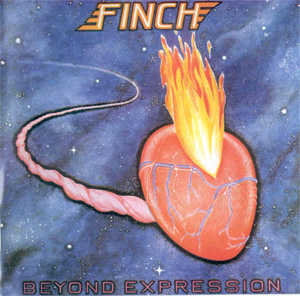
Finch - "Beyond Expression" {Netherlands} [1976] (Prog Rock)

The foundation of Dutch progrock band FINCH was laid by bass player Peter Vink and drummer Beer Klaasse (both ex-Q65 and The KJOE). They were eager to play progressive music: Peter was impressed by the symphonic rock of YES and BEER by the improvised rock of MAHAVISHNU ORCHESTRA and CREAM. After some sessions and failed efforts to find a good singer, the new band switched to instrumental music with this line-up: Peter Vink, Beer Klaasse, the 19 year old "guitar virtuoso" Joop van Nimwegen and keyboard player Paul Vink. With two Vink’s in the band the name became FINCH, the English translation from this Dutch name. The EMI sub-label Negram was willing to invest in the new progrock band, in ’75 this resulted in the debut-album "Glory of the Inner Force" (worldwide sold 20.000 copies). New keyboard player Cleem Determeijer’s interplay with guitarist Joop sounded captivating and the first album was hailed by the music press. The single "Colossus" (’75) wasn’t successful but it’s now a hugh collector’s item. In ’76 the second album "Beyond Expression" was released, it was acclaimed as Album of the week by radio and tv broadcasting company Veronica and known music magazines were very positive. The future looked bright for FINCH: sold oud concerts, worldwide sales (15.000 copies) and in Japan FINCH became almost as popular as other Dutch progrock bands FOCUS and EARTH & FIRE! Unfortunately Cleem was no longer able to combine the music with his classical study, he was replaced by Ad Wammes and, due to musical disagreement, Hans Borsboom replaced Beer Klaasse. This new FINCH line-up released the third album entitled "Galleons of Passion" in ’77, it was not received very well though the sales flagged around the 11.000 copies. It turned out to be the band’s swansong until in ’99 the Dutch record company Pseudonym Records released a 2-CD, including fine demos of the "Galleons of Passion" album and exciting live material from ’76.

The first LP "Glory of the Inner Force" contains four melodic and often swinging compositions with strong echoes from YES. The keyboards sound tasteful (Hammond organ and Mellotron), the guitarwork is great with passionate solos and the rhythm-section plays solid (a grunting Rickenbacker bass).

The second album "Beyond Expression" sound more original, inventive and dynamic with furious guitarplay and bombastic keyboards in four captivating and compelling tracks. A splendid album, a bit underrated because of the attention for the other Dutch progrock bands EARTH & FIRE, KAYAK and FOCUS. The third album "Galleons of Passion" is more in the vein of mid-GENESIS and sound pleasant but less captivating and contrasting. The 2-CD "The Making of...Galleons of passion/Stage" ’76” is mainly interesting because of the live-material: it’s layered with magnificent electric guitarplay (Jan Akkerman once told he was very impressed by Joop!) and great solos from Ad’s newly purchased Minimoog synthesizer. The live-CD contains the previously unreleased track "Necronomicon" (over 15 minutes), a ‘typically Seventies live progrock composition’ with lots of solos on guitar, keyboards and bass. http://www.progarchives.com/Progressive_rock_discography_BAND.asp?band_id=829


In the beginning of 1974 this 100% instrumental group was started in The Hague. Members: Beer Klaasse (drums, ex-Q'65), Joop van Nimwegen (guitar, ex-Cobra), Peter Vink (bass, ex-Q '65), Paul Vink (organ, piano, ex-Twelve O'Clock). Beer got replaced at the end of 1976 by Hans Bosboom (ex-Alveo, Chafing Blues and Blues Session), who in turn got replaced by Fred van Vloten (ex-Range). Paul Vink went to Livin' Blues in 1975 and was replaced by Cleem Determeyer (ex-Crusade) who made way for Ad Wammes in 1976. http://www.proggnosis.com/MUSIC_DBArtist.asp?txtArtistID=618


Finch was established by guitarist Joop van Nimwegen, bass player Peter Vink (Vink meaning Finch in Dutch) and drummer Beer Klaasse. The first two earlier worked together in the Dutch formation Q65. The musical leader was Joop van Nimwegen. For lack of a good singer, Finch decided to build a repertoire of instrumental rock. Keyboardist Paul Vink joined, but was later replaced by Cleem Determeijer, then a student at the Rotterdam Academy of Music.

The first album, Glory Of The Inner Force, was published in Finch's native Netherlands, as well as by Atlantic in the US. On both sides of the ocean the album received positive reviews. Determijer wanted to concentrate on his piano studies and was replaced by Ad Wammes.

The second album, Beyond Expression, became a Record of the Week on Radio Veronica, a popular Dutch seaborn station. Finch started to make a name for itself and began to attract crowds to their concerts in the Netherlands, Belgium, and Germany. A third album, Galleons Of Passion was published in the Netherlands and the UK, however, the frequent personal changes in the rock group made it impossible to continue. In 1978 the partnership was discontinued. Their three albums continue to attract the interest of those who enjoy early classic and progressive rock. http://en.wikipedia.org/wiki/Finch_(Dutch_band)


1. A Passion Condensed (20:05)
2. Scars On The Ego (8:51)
3. Beyond The Bizarre (14:24)


Line-up
- Cleem Determeijer / keyboards
- Beer Klaasse / drums
- Joop Van Nimwegen / guitars
- Peter Vink / bass


2. Scars On The Ego ...


Link for download "Finch - 1976 - Beyond Expression" in comments ...

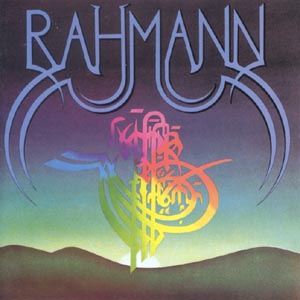
Rahmann - ''Rahmann''[1980]{France}(Fusion)

HMANN could be described as an Algerian version of MAGMA, without vocals, mixed with a some MAHAHVISHNU influences. The rhythm section in this band is absolutely powerful. If you can imagine layers of percussion instruments playing around some powerful drumming (almost like the Middle-Eastern version of the percussion work on a Fela Kuti album) you will have some idea of their concept of rhythm. Add to that, complex guitar riffing (sometimes on Fretless guitar), aggressive Zeuhl-bass, dissonant keyboards, and you have the ingredients for some powerful music. The CD contains 6 tracks from the original album, as well as a few bonus live recordings of the same tracks. This is a must for fans of AREA's Middle-Eastern/Greek influenced compositions.
Phenomenal music that shifts from aggression to beauty effortlessly.
Album Review For Further Information

Samurai - "Kappa" {Japan} [1971] (Heavy-Progressive)

This was not the British band with Dave Lawson, but a Japanese one. They moved to Britain in the late 60's, and got a contract with Philips. They were also joined by several British members and released a couple of albums. "Kappa" from 1971 reveals a band in the heavy-progressive vein and with a thing for lengthy jams and improvisations. This is especially apparent on the instrumental 22-minute "King Riff and Snow Flakes" that takes up the whole of side 2. Heavy guitar and organ dominates the sound, and literally every musician in the group is allowed to stretch out. The first side is a lot more structured and song-oriented, although the 10-minute opener "Trauma" also features lengthy improvisations. "Same Old Reason" is a strong tune with harpsichord and nice themes. The ballad "Daredatta" is sung in Japanese and dominated by the flute of Miki Curtis. "Vision of Tomorrow" is a straightforward and traditional 70's hard rock song. Overall, quite solid and enjoyable stuff if you're into early 70's heavy progressive rock with lengthy solos and instrumental passages. http://www.vintageprog.com/sss.htm


Samurai – a Japanese group led by vocalist/flautist Miki Curtis. They went to Europe in late 1967, picking up some European members and thus becoming half-Japanese. In London they recorded a single and their debut album, the double-LP [so I’m told] ‘Samurai’ a.k.a. ‘Miki Curtis & Samurai’ [German Metronome, 1970], as well as a single only released in Italy. They should not be confused with the UK group of the same name, who released a self-titled LP on Greenwich in 1971.


Their second album, ‘Green Tea’ [Philips, 1970], is as far as I can tell simply a single-LP repackaging of the debut only released in Japan, to where the band had returned. The last album that I know of is ‘Kappa’ [Philips, 1971]. The band played a varied kind of psychedelic progressive rock, occasionally a bit hard-rocking, with jazzy and exotic Asian touches. They’ve been compared by Vernon Joyson to Andwella’s Dream and early Traffic. The music on their first album [the only one I’ve heard] is fairly accessible, but without at all sacrificing quality or creativity. On ‘Kappa’ they reputedly played lengthier tracks with more of a heavy progressive leaning. ‘Samurai’/’Green Tea’ [single LP version] was reissued on CD by P-Vine. The bass player, Tetsu Yamauchi, was later in Friends [see above], Free and The Faces, as well as pursuing a brief solo career. Drummer Yujin Harada was later in the last incarnation of Far East Family Band [see above]. Graham Smith, credited on harmonica on the first 2 albums, is probably the same person who later played violin in String Driven Thing and Van Der Graaf. http://www.recordheaven.net/japan.htm


1 - Trauma (10:18)

2 - Same Old Reason (2:49)

3 - Daredatta (3:38)

4 - Vision Of Tomorrow (3:52)

5 - King Riff And Snow Flakes (22:28)


Line-up

- Miki Curtis: Vocals, Flute

- Joe Dunnet: Guitar

- Yamauchi Tetsuo: Bass

- Harada Yuji: Drums

- John Redfern: Organ

- Hiro Izumi: Guitar, Koto

- Mike Walker: Vocals, Piano

- Graham Smith: Harmonica


2 - Same Old Reason ...

Link for download "Samurai - 1971 - Kappa" in comments ...

Morse Code - "Procréation" {Canada} [1976] (Prog Rock)

This Quebecois band has three phases. First came the psych period under which they were known as MORSE CODE TRANSMISSION and made two psych albums in 71 & 72 sung in English. Highly collectible but somewhat out of the scope of this site. The second phase saw their names shortened and with the Quebec prog explosion under way decided to switch to French singing. The three albums that followed are real gems of progressive music oscillating between GENESIS and BARCLAY JAMES HARVEST but the French texts (sometimes highly impressive) gave them a sound of their own. Of those three albums, 'Procreation" is the better one but badly represented in the compilation - the only CD release so far. They disbanded, as the disco wave became a Tsunami in La Belle Province only to reform in 83 to make a best-forgotten English-sung album and again in 95 for a much better one again in French.


MORSE CODE is really recommended to fans of symphonic rock but the albums are somewhat hard to find (but not too difficult either) in vinyl. Plans are to release the three classic albums in the not-too-distant future. http://www.progarchives.com/Progressive_rock_discography_BAND.asp?band_id=1112


Morse Code is by and large the main progressive rock act to have grown on French-Canadian soil. While more locally popular groups like Harmonium and Octobre were inspired by specific prog elements while maintaining strong ties with folk and rock, Morse Code embraced the whole sound of the style. Where other bands like Pollen and Etcetera were only able to record one album, this group released three LPs in the mid-'70s that can be considered classic international prog rock items, essential to any serious fan's collection.


Main composer, vocalist, and keyboardist Christian Simard, guitarist/flutist Daniel Lemay, bassist Michel Vallée, and drummer Raymond Roy met in their teens. They began their career playing covers at parties, but soon were recruited by pop singers like Pierre Lalonde and Donald Lautrec to back them on stage and in the studio. Through this "day job," they acquired a commanding level of experience and chops. They formed Morse Code, started to write their own material, and released Morse Code Transmission in 1971. This and its follow-up, Morse Code Transmission II (1972), are English-only affairs and emulate the sound of late-'60s psychedelic rock groups like Iron Butterfly. Both LPs were met with indifference by the public and critics, and the group retreated to its accompaniment duties, working with mainstream pop singer Jacques Salvail among others.


Meanwhile, British progressive rock groups like King Crimson, Emerson, Lake & Palmer, Yes, and most of all Genesis, were provoking quite a stir in the province of Quebec. Christian Simard began to write new material strongly influenced by these artists. Preliminary shows in 1974 attracted the attention of Capitol Records and a contract was signed. In 1975 the group released La Marche des Hommes, which quickly became Quebec prog album. The opening title track summed up the ambition and musicianship of the international groups and the lyrics talked of universal subjects instead of the more self-centered output of local folk and rock artists. Both the local and international press greeted this album more warmly. Procréation, released in 1976, consolidated the group's reputation, thanks mostly to Simard's epic title suite, simply the best prog rock piece of music written by a Quebecer.


For the 1977 Je Suis le Temps, Capitol sent the group to London to record with Eddie Offord, the engineer responsible for Yes and ELP's classic albums. For a moment, Morse Code believed they had a chance to break out on the international market, what they weren't counting on was prog rock's brutal crash in the late '70s. Dropped by its record company, the group disbanded. It
re-formed in 1983 with the same lineup for a tentative comeback as an intelligent pop group with the LP Code Breaker, but this attempt failed rather miserably. In the early '90s, Capitol issued a CD compilation of the three French albums, allowing a new generation of Quebecers to discover a national prog treasure. Capitalizing on the good sales of the CD, the group recorded a new album, 1995's D'Un Autre Monde, and scored a minor campus radio hit with "Le Fils du Grand Dragon," but plans to put a tour together failed and Morse Code disappeared once again. Review by François Couture (AMG) http://www.mmguide.musicmatch.com/artist/artist.cgi?ARTISTID=1079774


Procréation: After the critical success harvested by La Marche des Hommes, Morse Code kept the same team of collaborators to record the follow-up, Procréation, truly a masterpiece of Quebec progressive rock. One exception: lyricist Chantal Dussault was replaced by Jean Robitaille. The previous album was already an impressive opus; Procréation added ambition, grandiose, and managed to be exempt of any weak tracks. Side one begins with "Précréation," an instrumental piece hinting at the themes developed onside two. "Qu'est-Ce T'es V'nu Faire Ici" (What Are You Doing Here?) is the closest the group gets to the sound of La Marche des Hommes: complex, dark, and witty. "Des Hauts et des Ha!" illustrates Robitaille's propensity for plays on words. For a lighter song, it is very well done, reconciling humor and prog rock without resorting to Frank Zappa-like comedy rock. "De Tous les Pays du Monde" (Of All the Countries in the World) is the only occurrence where Morse Code turned their interest to the rise of Quebec nationalism, but true to the group's universal ideals, Donald Lautrec and Robitaille wrote lyrics that could apply to any country, with lines like "You showed me my first sun/Drew my first rainbow" having the power to resonate in anyone's heart. Side two contains the 26-minute suite "Procréation," keyboardist Christian Simard's answer to Emerson, Lake & Palmer's "Karn Evil 9." In three movements, the piece constitutes the most impressive, monumental chunk of prog rock music recorded by a Quebec group. Its interlocking themes, alternating moods, and grandiose arrangements (slightly spilling over pomposity) are all memorable. Lyrics revolve around the procreation cycle and how children become parents. It is a shame that this album has not been reissued on CD, but that also makes it a prized collector's item. Review by François Couture (AMG) http://www.mmguide.musicmatch.com/album/album.cgi?ALBUMID=1218831

1. Precréation (5:05)

2. Qu'est-Ce T'Es V'nu Faire (4:45)

3. Nuage (4:01)

4. L' Eau Tonne (3:54)

5. Des Hauts et des Ha! (10:52)

6. Sommeil (5:07)

7. Procréation (47:54)


Line-up

- Christian Simard: Keyboards, Vocals

- Daniel Lemay: Guitars, flute and vocals

- Raymond Roy: Drums, Percussion

- Michel Vallee: Bass, Vocals (Background)


2. Qu'est-Ce T'Es V'nu Faire ...


Link for download "Morse Code - 1976 - Procréation" in comments ...

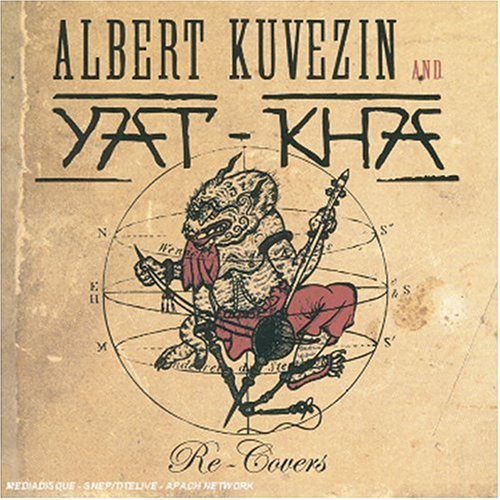
Albert Kuvezin & Yat-Kha - Recovers 2005 @192

Moscow, August 2004.

Albert Kuvezin has just checked into a hotel having spent 24 hours on a train from Budapest as the result of having been forcibly deported from Hungary along with the rest of his band. Their passports had been stolen from the dressing room of the gig the previous day. Their plea for help from the Russian Embassy resulted in them being frog-marched to the railway station and sent home. Before he can relax he receives a phone call from his co-singer Radik Tiuliush telling him that he has had enough of the rigours of travelling backwards and forwards from Tuva (a 3-day journey just to get to Moscow before an international flight takes them to start a tour).

There are only 2 days to find new passports and a new singer before they are due to begin a US tour. This proves impossible and Albert retreats to Kazyl where he is immediately hassled by mobsters and corrupt government officials. He then crashes his car and ends up in hospital.

Whilst convalescing Albert ponders his band’s future and listens to his record collection. Having spent many years being persecuted under the Soviets for listening to and playing rock’n roll he contemplates the long journey that his love of both Tuvan Folk Music and Western Rock has resulted in. He had toured the world many times playing at some of the great festivals such as Glastonbury, Roskilde, Bloomington, Monterey, Transmusicale, and Sziget. He had played
hundreds of club shows and listened to and met some great bands along the way. Bands like his thrash heroes Slayer and folk heroes such as the Chieftains and contemporary artists such as Billy Bragg and many more.

And now Yat-Kha was due to travel to London in October 2004 to record a new album that Albert had been busy writing earlier in the year. As he lay there with music from all around the world blaring out from his newly- acquired PA system Albert decided that he would commit his musical and spiritual journey to tape instead of his new songs. His new album would reflect how music took him from one of the world’s more remote regions to international recognition.

Remote, yes, yet central enough to pick up the currents of international music, even if the international music scene was not yet hip to the growling waves coming from Tuva. He would revitalise himself by re- engaging with his loves of country, blues, rock and just all things music. Although he was due to self-produce his new album Albert made a last minute phone call to the legendary world music producer Ben Mandelson who immediately made time to take over
production duties. Justin Adams, producer of Tinariwen, joins him on a couple of tracks.

The band began by jamming many of Albert’s favourite tunes and from this came the new album Re-Covers.

This is what Albert has to say about the album.

"The influence of rock on my music and life is obvious but anyway I’ll try to explain a bit more why I have chosen these songs for the covers album. Actually they are relatively to what I try to do for long time since I began to mix Tuvan music and my singing with Western rock."

When The Levee Breaks (Led Zeppelin).
"It is just on of my favourite band of the all time and I wanted to record more of them though who can compare with them even today?".

Man Machine (Kraftwerk).
"Remember that time? They were very fresh and unusual between the dominance of rock and punk. Plus very progressive. It is about our relationship with machine world. Almost Folkloric."

Ramblin’ Man (Hank Williams).
"I don¹t like when there is too much text in songs but this one is just about my self and my brothers - musicians. It is very close to our souls and spirit of freedom. Actually we are all the travellers on this planet."

In-A-Gadda-Da-Vida (Iron Butterfly).
"Great song because it is simple ­ I respect talented simplicity. Good voice and a guitar riff which always make me interested as a guitarist my self."

Love Will Tear Us Apart (Joy Division).
"This band wasn¹t well known in Russia but some band made big name and good career during USSR time copying and imitating the likes of JD. I like the mood and guess our manager Jim likes them very much."

Her Eyes Are A Blue Million Miles (Captain Beefheart).
"Of course, 20 years ago I didn¹t know about this man but when got listen it for the first time I thought that it could be me if I was born in USA at that time. But luckily I live in Siberia and like to say: "Hello!" back to those funny days."

A Song About A Giraffe (Vladimir Vysotskiy).
"The cult figure of Soviet Culture. The actor, poet, and singer he died in 1989 but is still very popular in Russia. His songs are full of sarcasm and humour. They are about the defects of human society and full of love and pain when about native land. This song is just one of hundreds he wrote."

Orgasmatron (Motorhead).
"I always liked music full of energy. Years ago I liked such kind of lyrics and wrote such my self. Also this is good possibility to remind to politicians who they are."

WillYou Go, Lassie, Go? ( Mc Peake Family )
"When I played with the great Chieftains I began to like Irish music and found some similarity with some Siberian people¹s music."

Toccata (Paul Mauriat).
"When I was little boy this melody by the French composer and conductor was played by his orchestra on Soviet T.V. and radio every Sunday and that gave us a very clear and nice holiday emotion for the whole day. This is a kind of connection to that happy time."

Black Magic Woman (Carlos Santana version).
"One more my favourite artist. This song is somehow connected to Siberian black shaman women whom I like very much."

Exodus (Bob Marley).
"Again, I love freedom and independence which are also possible through the movement and travels. I love to read about historical peoples movements. Plus I like Bob and reggae."

PlayWith Fire (Rolling Stones).
"I never liked very much RS and even less The Beatles. In this song I got good motion that gave me feeling to play such riff in the style what I like."

The Song of Mergen (Alexei Tchyrgal-ool).
"The composer Alexei Baktaevitch Tchyrgal is a great of Tuvan Symphonic music but he also wrote a number of nice songs for different ensembles and bands I am lucky enough to have been working with him and living in his neighbourhood. This song was written for the first movie about Tuva ­.

Links in comments

Drama - "Drama" {Netherlands} [1972] (Prog Rock) (@160)

In 1971 Drama is formed by four musicians: Polle Eduard (bass guitar, vocals, ex-The Tee Set, ex-After Tea), Uly Grun (guitar, keyboards, ex-After Tea), Frank van der Kloot (guitar, vocals) and Shell Schellekens (temporary member of Brainbox) drums. On the Philips record label two singles are released the same year, Down/Hard To Believe and Daddy Won't Let Me/Everywhere.

In 1972 the Drama's album is recorded and released. It is produced by Hans van Oosterhout, who was also the producer of Supersister. The reviews of the album are quite well, but the sales figures are bad. The record company wants a hitsingle and asks Peter Koelewijn to write one for the band. The song Mary's Mamma is not the music Drama wants to play, it is absolutely not representative of their music. Unfortunately for Drama, the single becomes a minor hit. Uly Grun also left the band the same year, leaving Drama as a trio.

Because of the arguments between Drama and the record company their enthusiasm is dropping. After another single Stop That Now/Bring Back The Money, released in 1973, they break up the band. Polle Eduard starts a solo career and Frank van der Kloot and Shell Schellekens formed the band Fontessa. Later Shell Schellekens became a producer (a.o. Golden Earring). (sources: Oor Popencyclopedie, Nationaal Pop Instituut, Album sleeves, Nederpop)


01 - Dreamed I Was The President (T. Schellekens) [4:46]
02 - I'm Your Hoochie Cookie Man (W. Dixon) [7:51]
03 - No Doctor (F. van der Kloot) [2:29]
04 - Melodrama (Drama) [4:30]
05 - Smile Or Yell (R. Eduard) [6:59]
06- Tell The World I'm Coming (U. Grun) [2:57]
07 - Brains Or Not (R. Eduard) [6:31]
08 - Give Up And Go (R. Eduard) [2:29]

Bonus Tracks:
09- Down (R. Eduard) [3:08]
10 - Hard To Believe (Drama) [5:18]
11 - Daddy Won't Let Me (R. Eduard) [3:04]
12 - Everywhere (U. Grun) [3:27]
13 - Mary's Mamma (P. Koelewijn, P. Schoonhoven) [3:20]


Line-up
- Ton "Shell" Schellekens: Drums
- Polle Eduard: Bass guitar, acoustic guitar, vocals
- Uly Grun: Hammond organ, Mellotron, Guitar, vocals
- Frank van der Kloot: Guitar, vocals

Guest: Sascha van Geest: Flute on track [08 - Give Up And Go]


Information:

Produced by Hans van Oosterhout (except track 13 which was produced by Peter Koelewijn).
Engineered by Erik Bakker and Henry Bentson.
Recorded at theGTB Studios, The Hague, Holland.
Sleeve design by Jan H. van Uden.
The bonus tracks are a- and b-sides of singles.

LP Phonogram 6413021 (1972)
LP Phonogram 6413028 (1972, including Mary's mamma)
CD Pseudonym CDP-1046 (1997)


Review:
"I must admit, the music of Drama is more rock than progressive. On the other hand they did have progressive influences, but most of all the did have Frank van der Kloot. He was a young and brilliant guitarist which makes this band just a bit more interesting than some of the bands that were in the same space of time.

So what about the music. The album opens with a heavy track Dreamed I was the president which has a typical seventies sound and a great guitar solo. This is followed by the superfluous blues cover I'm your hoochie cookie man. Again the guitar is good, but the more interesting tracks are the slow, early progressive No doctor and Melodrama, a song that is built up to a wonderful guitar outburst. Side B continues with the cheerful Smile or yell and the (excusez le mot) rockballad Tell the world I'm coming. One of the better tracks is the dynamic Brains or not. The album ends with acoustic guitar and wonderful flute playing, by Supersister's Sascha van Geest. A nice early progressive effort with great guitar work.

The bonus tracks are singles they released, which show their ability to create good melodic rock tracks. But when you listen to Mary's mamma, it is not hard to understand why the band hated this song. It is terrible, awful and has nothing to do with the music they really make."
(Agemo, Dutch Progressive Rock of the Seventies) http://users.keyaccess.nl/~wemmg01/drama.htm


04 - Melodrama ...

Link for download "Drama - 1972 - Drama" in comments ...