Sensiva Immagine - "E Tutto Comincio Cosi" [1977] @224 (italian prog rock)

This time our prog plane is going to Italy :) here is some copy/paste: Sensitiva Immagine was an Italian group that released one album in the late seventies. The group consisted of Alfredo Olivieri (vocals), Massimo Buriani (guitars), Stefano Bertonazzi (keyboards), Andrea Pavinato (bass) and Franco Buriani (drums). The music is somewhat reminiscent of the other Italian symphonic groups like Locanda Delle Fate and later group Nuova Era but with some foreign influence as well.

Keep Listening! Links in comments..

intro/Sensitiva Immagine........
overture/Sensitiva Immagine...

BlackwatchPlaid's Electronic Mix @ VBR (3 Part Electronic/Psytrance/Ambient Mix)

Hey there, bloggers. I thought I would go out on a limb here and try something radically different for this blog. Diversity is celebrated and encouraged amongst the members of the prog not frog team, and in keeping with that motive, I figured I would showcase an alternate side of my tastes, electronic music. I couldn't ethically bring myself to post any full albums by these artists, as they are fairly recent acts, so instead I decided to make a 3 ZIP mix.

The 4 groups showcased here are, in my opinion, the heavyweights of their respected genres. Infected Mushroom has taken the psychedelic trance medium and used classical musical training to take it to new heights. Orbital were an English techno duo formed in 1989, consisting of brothers Paul and Phil Hartnoll, who proved that techno music can be enjoyable as more than just "dance music". Shpongle is a collaboration of jazz flautist Raja Ram and trance artist Simon Posford who fuse trance music with regular instruments that takes alot of inspiration from folk music around the world. You can hear some relations to spanish, india, african countries among others. Steven Wilson is the founder and major creative talent behind the modern progressive rock band, Porcupine Tree. In 2004, he released a very limited (350 total copies pressed in CDR format) album called Unreleased Electronic Music, Vol 1, which contains exactly what the title suggests; more precisely, music created since 1990, somewhat similar to that of SW's ambient project Bass Communion but more rhythmic and mostly in an ambient/electronic vein. Some pieces were created for television commissions, but none were ever fully developed.

I'm not quite sure how this compilation will be received, maybe you like electronic music, maybe you hate it. I just wanted to be able to have all of my tastes displayed on this blog. Hopefully it will allow a few people to open their minds a little and expand their listening tastes.

Tracklisting:

Part 1:
1. Infected Mushroom - B.P. Empire - 09 - Dancing With Kadafi (320)
2. Infected Mushroom - Classical Mushroom - 01 - Bust A Move (256)
3. Infected Mushroom - Classical Mushroom - 05 - Disco Mushroom (256)
4. Infected Mushroom - Converting Vegetarians (CD 2) - 02 - Elation Station (192)
5. Infected Mushroom - Converting Vegetarians (CD 2) - 03 - Drop Out (192)
6. Infected Mushroom - Converting Vegetarians (CD 2) - 10 - Selecta (192)
7. Infected Mushroom - Converting Vegetarians (CD 2) - 12 - Jeenge (192)
8. Infected Mushroom - Merlin - 06 - Classical Mushroom (192)

Part 2:
1. Infected Mushroom - I'm the Supervisor - 10 - Stretched (VBR 217)
2. Orbital - In Sides - 01 - The Girl With The Sun In Her Hair (256)
3. Orbital - In Sides - 02 - P.E.T.R.O.L. (256)
4. Orbital - In Sides (Disc 2) - 05 - The Box (Radio Edit) (256)
5. Orbital - In Sides (Disc 2) - 06 - The Box (Untitled Version 1) (256)
6. Orbital - In Sides (Disc 2) - 07 - The Box (Untitled Version 2) (256)
7. Orbital - In Sides (Disc 2) - 08 - The Box (Vocal Reprise) (256)

Part 3:
1. Orbital - The Middle of Nowhere - 02 - Spare Parts Express (192)
2. Orbital - The Middle of Nowhere - 06 - Nothing Left 1 (192)
3. Orbital - The Middle of Nowhere - 07 - Nothing Left 2 (192)
4. Shpongle - Tales of the Inexpressible - 01 - Dorset Perception (256)
5. Steven Wilson - Unreleased Electronic Music Vol.1 - 01 - King of the Delta Blues (VBR 257)
6. Steven Wilson - Unreleased Electronic Music Vol.1 - 03 - Dub Zero (VBR 243)
7. Steven Wilson - Unreleased Electronic Music Vol.1 - 11 - Apres-Mortes (VBR 176)


Samples can be heard on a previous post on this blog: BlackwatchPlaid's Playlist

Keep Listening!!!!

Links in comments....
Ensamble Musical de Buenos Aires- La Biblia [1974] @ 256 South American Progressive Masterpiece

Undoubtedly Argentina was, during the 70’s, the place where rock had its deeper roots in the Latin-American environment.. Of course there were great bands in Mexico, Perú, Brasil and Venezuela, but the Argentineans were more articulated and coherent, they had more venues for rock and psych and the music labels were bolder. They also have more bands, and better. One of them was Vox Dei, a seminal psych prog combo whose members had ( as any South American catholic) a love-hate relation with religion. Due to this obsession with religion images and tales, Vox Dei released La Biblia in 1970 and the album became and immediate successes although the band itself was never as big as others like the fantastic Charly García and Nito Mestres’ Sui Generis or the incredible psychedelic troupé Los Gatos.
Anyway, La Biblia was a conceptual album too big to be capitalized by only one band. This was soon understood by Jorge Alvarez, music producer, and Billy Bond, leader of the band Billy Bond and La Pesada. Both started planning a big event in which La Biblia was to be performed as an Opera Rock (going thus beyond the conceptual album format).
What had begun as a reflection on sacred scriptures was now a project of epic proportions. Bond convinced some academic musicians from the classical orchestra “Ensamble Musical de Buenos Aires” and all of a sudden everything was ready for La Biblia to become a glorious page in the history of South American prog.
It was recorded during 1974 for the second time with the Ensamble (more than 400 hours of work!) and performed at Buenos Aires national Theatre with a line up that was the Argentinean rock dream team of that era, including big names like. Mestre, García and Juan Rodriguez from Sui Generis, the singer author Raul Porchetto, the pop icon David Lebon, The pianist Carlos Cutaia, and many more, all of them produced by the guru Jorge Alvarez under the academical direction of Gustavo Beytelman.
The result is a very complex and baroque mix of symphonic prog rock, grandiloquence and pomposity, incredibly good encounters of the orchestra and the rock musicians, and overall a magnificent, bigger than life, piece of work, as any real symphonic progressive rock opera should be.
Those who don’t speak Spanish do not need to worry about the lyrics, just grab your grandma’s bible and start reading until you reach alpha state and fell in trance. Once under this hypnotic influence, travel back to Buenos Aires, 1974. And enjoy.

This album contains all that is great about prog, all that is ridiculous, silly, magnificent and glorious. Listen to the roar of the opening of the Red Sea Waters, Fear the Lord and His Wrath, Watch the God’s Opus, See the Archangels that Dwell in Heaven, listen to Miracles and Wonders and Inspiring stories from the Voice of the Prophets.


Welcome to The Bible.

Unforgettable.

Keep Listening…!!!


Link in comments as usual.


Ensamble Musical de Buenos Aires -Profecías...

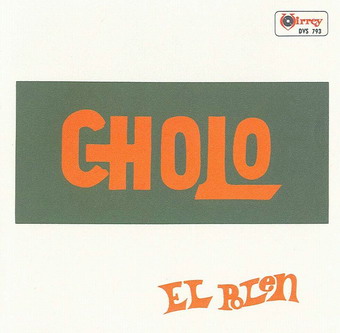
El Polen - "Cholo" [1972] @192 (peruvian psychefolk)

Hola! This time our plane goes thru peru. i must say since i have the mp3's of this band..i stucked on listening some songs..i am sure you will like this band too..here is copy/paste: 1972 was the year of El Polen, one of the first Andean Acid Rock groups ever. Their first lp was the soundtrack of an European movie, "El Cholo", based on the life of the Peruvian soccer player Hugo Sotil. Their music was a mixture of psych rock and andean music played on native instruments,quenas and antaras, with traditional rock instrumentation, creating a unique style where violins sounded like fuzz guitars. El Polen’ s "Cholo" and Los Jaivas "El Volantin", were the first acid folk lps from South America. You can find a very good review here Dreamy listenings.. :) Links in comments..

Valicha/El Polen...

El Polen - "Fuera De La Ciudad" [1973] @192 (peruvian psychefolk)

1973, El Polen recorded their second lp, "Fuera de la Ciudad" ,continuing with their pioneering style... read more here .This album equals to 10 kisses of a sweet darling+ taking a nap near riverside+ 1 cup of aromatic coffee :)

Link in comments..happy dreamy listenings :)

Concordancia/El Polen...

Pell Mell - "From the New World" [1973] @256 (german prog rock)

Pell Mell were formed in Marburg in 1971 by Thomas Schmitt (violin, guitar, vocals), Otto Pusch (organ, piano), Rudolf Schon (vocals, recorder, guitar), Jorg Gotzfried (bass) and Mitch Kniesmeijer (drums). Their home city also gave the name for their debut album, recorded during 1972 at the Dierks Studio, Stommeln, produced by Peter Hauke. This contained an inspired form of symphonic rock comparable to Nice and particularly Emerson, Lake and Palmer. Like these, Pell Mell often borrowed classical themes. Pell Mell's sound was characterised by colourful, swirling Hammond organ, a violin (which Thomas Schmitt played with great virtuosity), mellotron, recorder and... read more here

From The New World/Pell Mell...

Keep Listening! Links in comments..

Änglagård - "Epilog" [1994] @ 256 (Swedish Progressive Rock)

When you start up a discussion about the most influential albums in progressive rock history, you expect the conversation to center around such albums like Close to the Edge, Brain Salad Surgery, Octopus, Foxtrot, or In the Court of the Crimson King. However, for many bands who have gotten their start in the last ten years, they drew a wealth of inspiration from the Swedish legends Anglagard, a band who grew up on the albums listed above and then churned out two of the most impressive prog albums of the 90’s, Hybris and Epilog. While much has been said about the near perfect debut Hybris, let’s take a close look at the equally impressive follow-up, which turned out to be the band’s last studio album.

If you are new to Anglagard (or the Swedish prog scene in general), they use many 70’s influences and weave them into a powerful yet dark tapestry of sounds. Combining elements of Jethro Tull, Genesis, Yes, and King Crimson, Anglagard switch from furious, angular rockers, to twisting, complex fusion vamps, to atmospheric moody passages dripping with gothic imagery as fast as you can blink. While Hybris contained a fair amount of Swedish vocals, this album was all instrumental but for a few brief passages. “Hostsejd” is a 15- minute gem that throws at the listener everything imaginable, yet remains a simply majestic piece of beautiful music. Flutes and Mellotron create a haunting, romantic picture, but are quickly smashed to pieces by complex guitar and Hammond lines on top of a furious rhythm. As quickly as the fury arrives, it is hushed away by gentle flute passages that drop in from the clouds, which slowly pick up steam and volume while drums and bass get more violent. This constant push-pull from quiet to rage is what Anglagard is all about, and they do it marvelously.

The band goes for a more pastoral feel on “Skogsranden”, with nimble piano lines from Thomas Johnson complemented by the lush acoustic guitar of Tord Lindman. Again, don’t get too comfortable, as about 3 minutes into it the listener is treated to intense Hammond, weaving electric guitar, and muscular Rickenbacker bass. Backed by the ever creepy Mellotron, the band extends an intricate workout, and to relax and slowly build up the tension once again. In the distance you can hear flickering organ and ethereal female vocals, followed by a gorgeous flute solo from Anna Holmgren. More than once you will be reminded of the great drama that Genesis created on albums like Tresspass, Nursery Cryme, or Foxtrot, combining light acoustic moments with violent outbursts of rock energy. The final two minutes of this piece is quite chaotic, as the Mellotron leads in rampaging and weaving guitar, keyboard and flute blasts that are simply stunning to hear. The last of the CD’s lengthy tracks is “Sista Somrar”, a real classical sounding tune with cellos, and ominous waves of Mellotron. The Jethro Tull influence can be heard here to great effect, with plenty of rock flute playing and intricate percussion, not to mention heavy use of Hammond. The way these players are locked in and weave such complex lines around each other is just breathtaking, and the music always seems to be heading in a logical direction. The guitars of Holmgren and Jonas Engdegard take on an aggressive tone midway through this tune, snaking around the urgent flute passages while huge amounts of Mellotron provides the dramatic background. Just when you think the band is going to keep plowing forward with this insane intensity, the opening melody line is back, and acoustic guitars, Mellotron, flute, and cellos finish out the song with gentle, lulling ease, accompanied by a tortured electric guitar solo.

The CD ends with the short “Saknadens Fullhet”, a nice little piano goodbye from Thomas Johnson. It would almost be a fitting finale, as Anglagard quietly went away after playing some farewell gigs and split up. After only two studio albums and one live release, the prog world was left wanting more.

--- review by Pete Pardo @ http://www.seaoftranquility.org

Highly Recommended!

Sample coming soon!

Keep Listening!!!!

Link in comments....

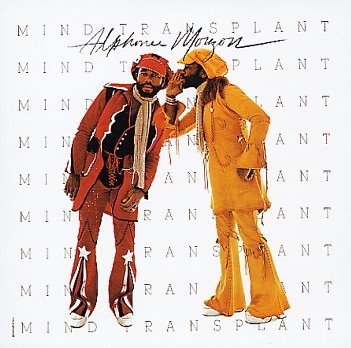
Alphonse Mouzon - "Mind Transplant" [1974] @ 256 (Amazing Jazz Fusion)

Drummers Alphonse Mouzon and Billy Cobham led almost parallel careers during the 1970s and helped to raise the bar by which all subsequent drummers were to be judged. They were both in legendary fusion bands (Mouzon in Weather Report and Larry Coryell's Eleventh House and Cobham in Dreams and the Mahavishnu Orchestra), both led their own successful bands, both reinvented jazz-rock drumming, and both released one classic, genre-defining recording. Cobham's classic was Spectrum, a recording that is regularly considered as one of the genre's best. This, Mind Transplant, is Mouzon's classic recording that is often hailed as "Spectrum II." The common thread, besides the aggressive drumming, is guitarist Tommy Bolin. Where Cobham used Bolin's aggressive playing as a counterpoint to Jan Hammer, Mouzon features the guitarist as the primary attraction. The tunes themselves may not be as memorable as, say, "Red Baron" or "Stratus," but the playing is no less inspired. Mouzon and Bolin are a natural fit and push themselves to levels of creativity and skill that few can attain. Raw and powerful, the music herein is what made fusion such a viable musical style. This recording has never been as popular as Spectrum, but was finally released on CD in 1993 with the addition of the 15-minute jam session "The Real Thing." Easily one of the best fusion recordings of all time.

-- http://harukimurakami.livejournal.com/

Highly Recommended!

Samples coming soon!

Link in comments....

Amon Düül II - "Hijack" [1974] @ VBR 202 (Kraut Rock)

Hi all. Again I find myself filling a request here. I am not a big fan of Amon Düül II, or krautrock in general. I figured, a fan of the blog asked for it specifically, why not try to track it down... It was pretty hard to find any info about this album as it seems to be a rarity. Enjoy!!

Re-issue of one of the hardest to find albums by Amon Düül II from 1974. Their eighth album it saw the band continue to dabble with more commercial avenues and bring in diverse styles to the bands overall space rock sound. Similar to Vive La Trance and the album that followed Made In Germany, this is inspiring avant-garde rock pop from one of the best German bands of the '70's.

Samples will be back soon!

Keep Listening!!!!

Link in comments....

Locanda Delle Fate - "Forse le Lucciole Non Si Amano Più" [1978] @ 256 (Excellent Italian Symphonic Prog)

Perhaps the finest release of Italian progressive rock there ever was. For some on rec.music.progressive this is their favorite album period; I won't go that far, but I will certainly sing its praises.

Locanda Delle Fate did not invent any new styles. They have the dual keyboards, used with a healthy amount of flute to contribute softer parts while the guitar and gruff vocals often provide the harsher counterbalance. This isn't something unique in Italian progressive rock. They were, however, able to do so much with that style that the earlier bands didn't seem to. Melodies are layered on top of counter-melodies with a subtlety often lacking in the symphonic prog world; in fact, you could listen to this album for months before it hits you with its full force. While the arrangements can be dense, they never seem that way and the often clinical feel of such arrangements is not here.

Each track on this album is a success. The longer numbers tend to be developed intelligently, with a logical progression of themes that stops short of milking them for length. The shorter ones hit the listener with an idea or two, and tend to be somewhat simpler. Highlights would have to include the opening instrumental and the title track.

For those looking for comparisons to other bands, I could offer perhaps early PFM, Celeste and Maxophone. In my opinion, however, LDF is better than all of these bands. It is indeed a handsome slice of classic Italian symph prog. Locanda della Fate fall somewhere in between Genesis and Yes. The guitarist is a pretty obvious Steve Hackett disciple, both in the broad, melodic style of his playing and also the way he occasionally employs Hackett's well-known 'weeping' effect. The keyboardists lean favorably towards Tony Banks' sense of balance and servicing the composition, yet at the same time take full advantage of the Rick Wakeman palette, including those keys that Banks never really touched (e.g., harpsichord, clavinet). The lead vocalist is an acquired taste, singing somewhat gruffly but with gusto. I personally find his vocals quite enjoyable. This is on my short list of albums that every progressive rock fan should own. Any further superlatives would be redundant. Get it!

-- compiled from reviews by Joe McGlinchey & Sean McFee @ http://www.progreviews.com

Highly Recommended!


Track 1 - Volte un Istante Di Quiete......
Keep Listening!!!!

Link in comments....

The Voice of the Moon # 2, with The Herbalist (Second podcast, egocentric amusing collection of great songs mixed with self indulgent babbling)


I did it again. Another Podcast. This is much better than the first one, I think. I bought a better microphone (cheap!) and had more time to think about the music. I also fixed some sound glitches in the teasers and intro. It is still far from what I want to do in podcasting and I need further practice on my english flux and rythm, but it is an improvement, that I dedicate to you all.

Your comments helped me a lot. Thanks to all who listened.

This time I wanted to broadcast music that is very unknown among the usual public that comes to this blog. Bands like Drums & Tuba, Blackbright Morning Light or The Changelings are not what proggers and psychers are used to listen to. I did that on purpose so people here get to listen to new and a bit different things.
The good thing about proggers and psychers is that their ears are alwayes wide open to new sounds. This collection of songs is an tribute to that virtue.

I hope you all enjoy it.

Please write something in the comment's section. Your opinions are highly appreciated.

Big Hug from Herbaltown, in Prognotfrogland.

Your friend and BrainSmasher,


The Herbalist

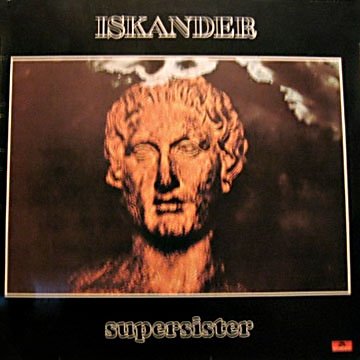
Supersister - "Iskander" [1973] @ 320 (Dutch Progressive Rock)

It is said usually that Iskander is less listenable album of Supersister than early albums of this band. As though, Iskander is “avant-garde”. I do not think so. Yes, this album is more difficult for perception and understanding. Yes, this album is closer to “avant-prog” or “RIO” than early Supersister works (Present from Nancy and To The Highest Bidder). But the same situation took place with music of the other leading prog-bands of those years. In other words, Iskander was natural, organic product of the musical evolution of Supersister, and this evolution was, to some extent, similar to the evolution of some British prog-bands in this period. Iskander is the concept album which is devoted to Alexander the Great. Please do not forget that 1973 is the year of the prog concept albums. Music continuously develops, and this album is the most monolithic, coherent work by the band. Moreover, this development is symphonic by its nature. Therefore reviewed album is not “avant- garde” like Frank Zappa, Henry Cow or Soft Machine (although the general features can be found). Yes, we face with a lot of “avantish” dissonances, breaks and changes in tempos, rhythms and measures, but symphonic component matters. Another important thing is the presence of Arabian “motives”. Arabian elements in the progressive rock are the extraordinary rarity. Iskander is opened by brass wind solo which creates “Near-Eastern” mood from the beginning of the album. And further Arabian “motives” are intertwined with many themes and “pieces” of this album. It is almost impossible to mark out the best tracks, it is breathtaking from the beginning till the end. But it is necessary to mention marvellous and wonderful melodies in “Roxane” and “Looking Back”, and also really progressive development of themes in “Alexander” and “The Battle”. Iskander is indeed an innovative album which has surpassed time. Iskander is a must know for any lover of prog.

--- http://www.progarchives.com

Highly Recommended!

Track 4 - Confrontation Of The Armies.....
Track 5 - The Battle......................

Keep Listening!!!!

Link in comments....