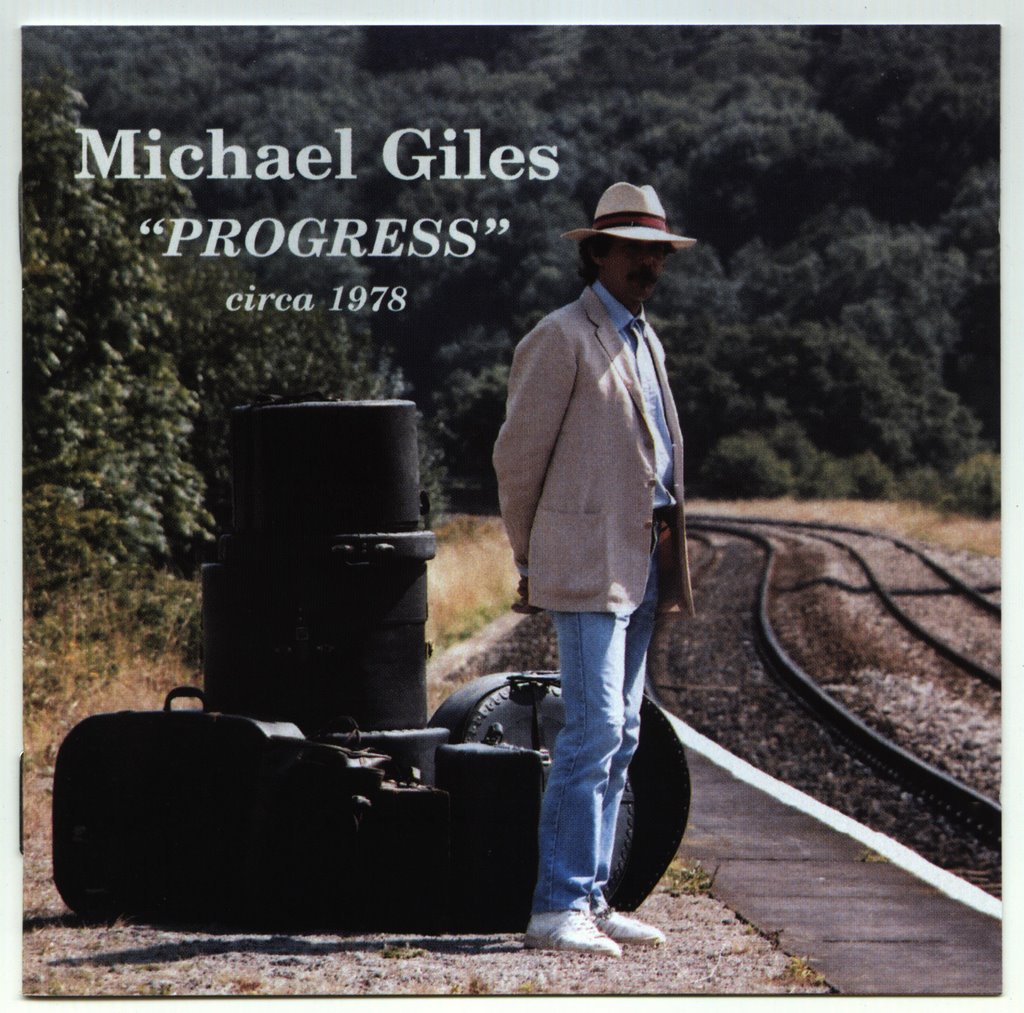
Michael Giles - "Progress" [1978] @ 192 (Drummer from G,G,& F and King Crimson)

The first half of this writeup was taken from a bio on http://www.nndb.com/ . The second half was included on a text file that came along with the album when I found it on a p2p program, and alas, not being able to find a decent review, I have chosen to use that as a description of the album.

Michael Giles had his first professional gig in 1964 with Trendsetters, Ltd., later moving on with his brother Peter Giles to become Robert Fripp's partner in obscurity as a member of Giles, Giles and Fripp in 1967. This of course led to the first incarnation of the mighty King Crimson, but almost as soon as the band was underway it was falling apart, with Giles and Crimson multi-instrumentalist Ian McDonald turning in their notice and recording the much less aggressive McDonald and Giles in 1970.

In the 1970s Giles worked as a session player for artists ranging from Steve Winwood and Kevin Ayers to Leo Sayer and Neil Sedaka. His own musical output in subsequent years has been almost nonexistent, the few exceptions being the soundtrack piece Ghost Dance (a collaboration with Jamie Muir and David Cunningham, recorded in 1983 but not released intil 1996), and his only solo album Progress (recorded in 1978 but not released until 2002). In 2002 Giles joined with McDonald and his brother Peter, as well as former Crimson wind player Mel Collins, to form 21st Century Schizoid Band, a band primarily focused on rehashing songs from the early stages of King Crimson; he was replaced in 2003 by fellow KC ex-drummer Ian Wallace.

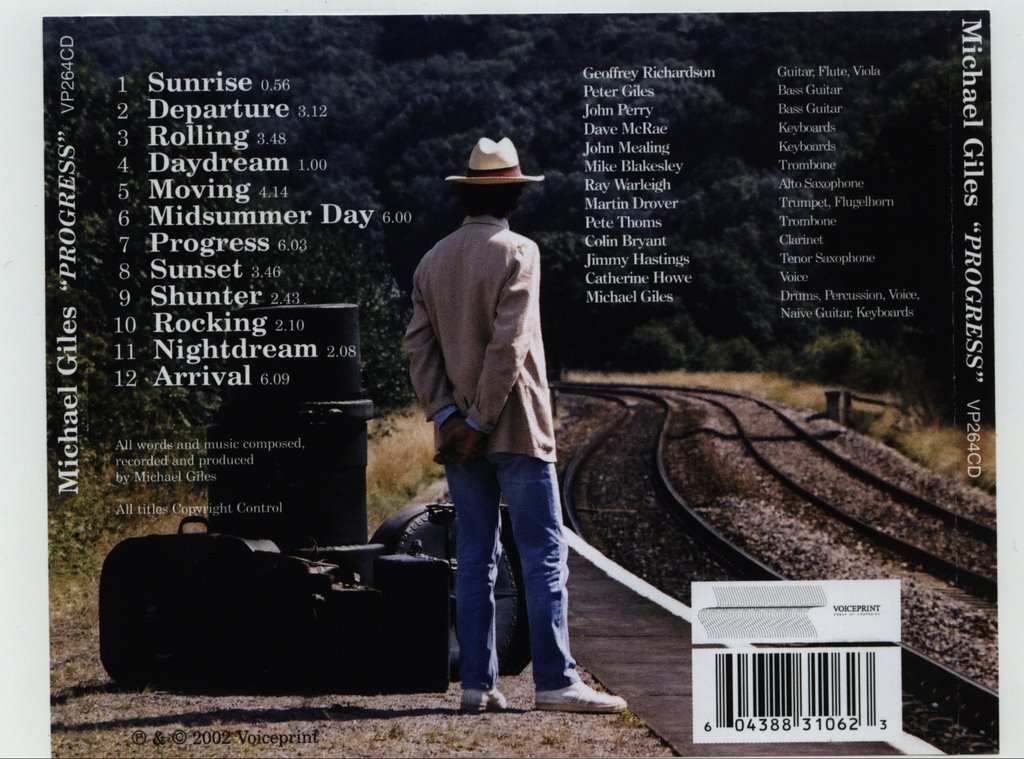
Progress was recorded in 1978 and is a previously unreleased album written and performed by Michael Giles aided by an amazing collection of classic progressive rock & jazz 'names' including Geoffrey Richardson (Penguin Café Orchestra, Caravan), Jimmy Hastings (Caravan) and John G. Perry (Caravan, Quantum Jump), Dave McRae (Matching Mole), Peter Giles (King Crimson/Giles, Giles and Fripp) and Ray Warleigh.

Following his days with the original King Crimson and the release of his LP with Ian McDonald, drummer Michael Giles focused on studio work. After building his own recording facility, he began work on 'Progress', completed it around 1978, mixed it and then put it on a shelf, waiting for the right moment to put it out as prog rock was experiencing an abrupt decline in popular favour. It came out only in 2002 and thus will appeal mostly to nostalgic fans.

A loosely conceptual album built around a trip by train, 'Progress' is a very nice album of prog-rock with hints of jazz fusion and Canterbury-style writing. Michael Giles is not a great singer. His voice recalls Chris Squire's on the latter's solo LP 'Fish Out of Water', i.e. it lacks strength and character to assume a leading role. Then again, only five of the 12 tracks have lyrics. The other tunes range from delicate atmospheres to full-on prog-rock anthems and feature established UK musicians like Geoffrey Richardson, John Perry and Jimmy Hastings, plus brother and also ex-Crimson Peter Giles. Highlights include 'Departure' where the drummer reminds us that he has the finesse of a free improviser, the quiet 'Midsummer Day', 'Progress' and the jazzier 'Arrival'. Most of all, 'Progress' shows how good a session player and studio arranger Giles could be. It will be of more interest to fans of Cunning Stunts-era Caravan and Hatfield & the North although the music adopts a friendlier mood reminiscent of Anthony Phillips' pop albums from the same period than to King Crimson completists.

Highly Recommended for King Crimson aficionados.

TRACKLIST:

1. Sunrise
2. Departure
3. Rolling
4. Daydream
5. Moving
6. Midsummer Day
7. Progress
8. Sunset
9. Shunter
10. Rocking
11. Nightdream
12. Arrival

Keep Listening!!!!

http://www.f-forge.com?d=YE5Z8VnwFBCy6j1PliNr

Michael Gibbs - The Only Chrome Waterfall Orchestra [1975] @ 192 (British jazz)

As this album is referred to in the comments to the Pork Pie album below, so it's only fair that it be made available as well.

This is a very hard to find album from British composer, arranger Michael Gibbs. Recently some of his seventies output, originally out on Deram, was re-released. This one missed out as it was on the Bronze label, more famous for Uriah Heep, Colosseum and the like. Just how Gibbs ended up on this label is hard to fathom.

Nonetheless, it is a brilliant album and shows not only the talent of Gibbs, but also that a large ensemble can sound very modern. Despite the fact that the album is 31 years old, it still sounds absolutely fresh.

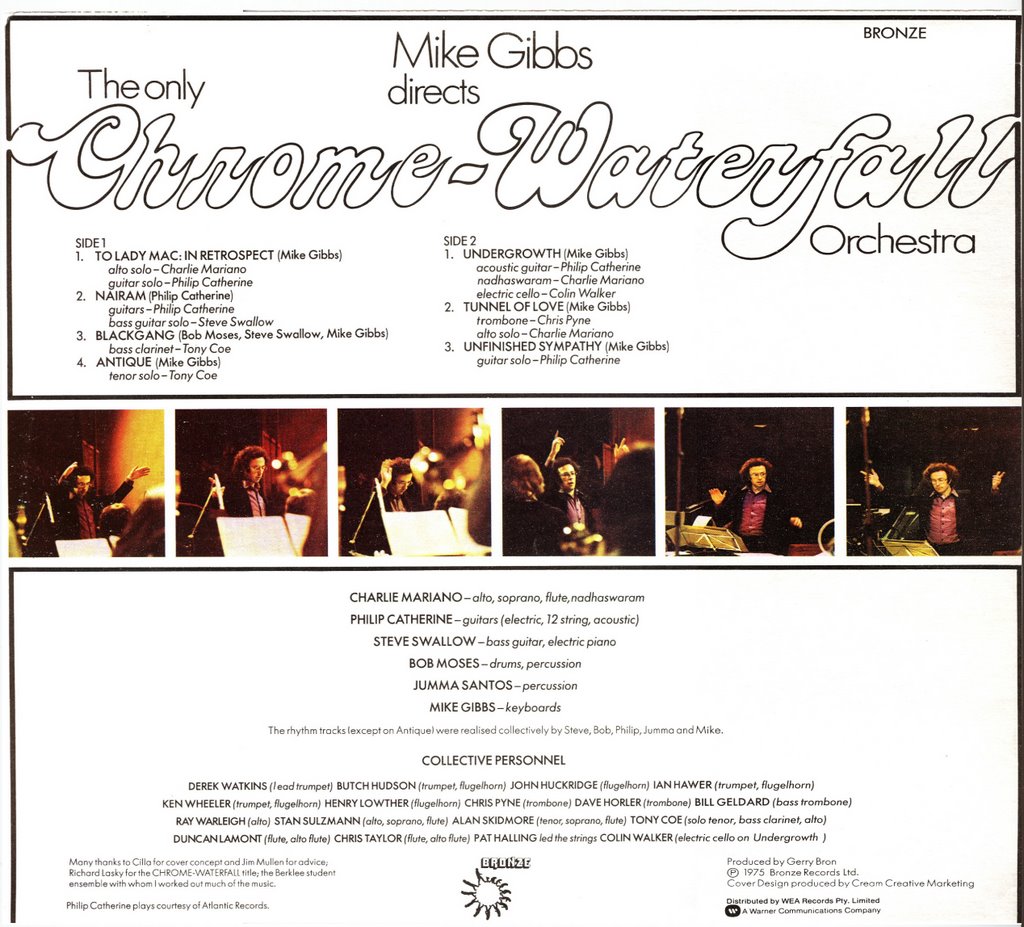
This is due in part to the vision of Gibbs and his choice of musicians. The band features Philip Catherine on guitar and Charlie Mariano on reeds, flute and nadhaswarwm (see the comments to the Pork Pie). In addition, he chose Steve Swallow for bass duties.

It is in Nairam, composed by Philip Catherine, that this totally modern appoach is best seen, a beautiful tune, with solos fom Catherine and Swallow. The electric bass solo is a prime example of how this instrument can play lead, as opposed to the bass solo designed to keep the bassist quiet. In the wonderfully rhythmic Undergrowth opening, Swallow and Catherine pump out the theme in tandum to real effect, again an imaginative and successful use of Swallow's considerable talent.

Aside from the abovementioned, Bob Moses and Jumma Santos (I think he was the percussionist at Woodstock with Hendrix) add percussive colours. As an aside, Moses has made many fine albums as leader and all are well worth seeking out.

The cream of British musicians make up the brass section including Kenny Wheeler, Henry Lowther, Chris Pyne, Ray Warleigh Alan Skidmore.

Michael Gibbs remains an unsung force in the development of modern British jazz. Aside from a clutch of innovative and enjoyable albums, he also worked with ECM Records on various projects, including Gary Burton's Seven Songs.

His cv is very broad, and includes, Mahavishnu Orchestra on Apocalypse; Uriah Heep; Joni Mitchell; Roy Harper's Valentine; Jaco Pastorius and even Back Door's Another Fine Mess. Really that about covers every musical genre! But I won't mention Whitney Houston's Whitney.


Nairam

Keep Listening!!!


http://rapidshare.de/files/22502848/Mike_Gibbs_-_Only_Chrome_Waterfall_Orchestra__1975.rar.html

Uakti – Uakti [1987] @ 256 Amazing Surreal Tropical Ritualism

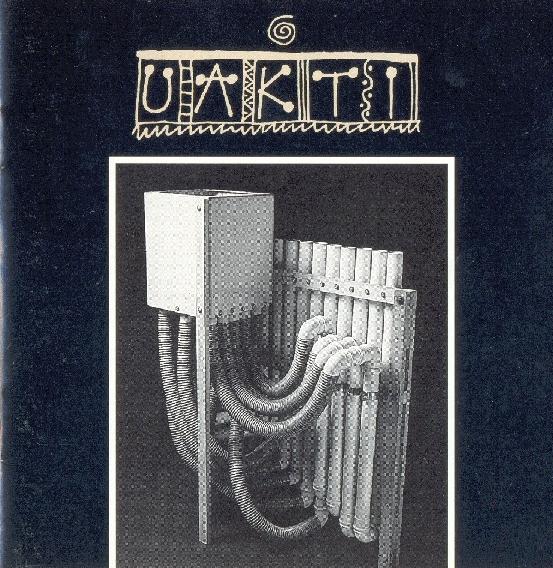
Uakti occupies a very special place in the celebrated brazilian musical scene. They make their own instruments. (See the scanning of the booklet and be amazed by the Glass Marimba, The Planetarium or the incredible Trilobite, a weird and futuristic multidrum designed to be struck with the fingers.)

Beyond the obvious attraction that people feel to alien instrumentation, Uakti members have really made deep contributions to the future of music. Among their admirers we could count the Blue Man Group, also builders of extreme percussion objects and Phillip Glass, with whom they published the internationally acclaimed Aguas do Amazonia, a tribute to the rivers of the biggest Tropical jungle of the planet.

Uakti is a quartet: the percussionists Decio Ramos and Paulo Sergio dos Santos and the multi instrumentalist Artur Andres, the fourth member Marco Antonio Guimaraes, brain of the group, creator of the instruments and musical director, no longer plays in the band concerts. He prefers to stay in the shadow, composing and creating new and more complex forms of music.
Actually Uakti is an experimental band in more than one sense. Guimaraes have also created a parallel musical notation, that uses mathematical and geometrical symbols to simplify patterns, durations and percutive scales. This experimental notation that they use along with the traditional one has been used by Physicist Maurice Brazin, to teach aboriginal Amazonians Music and Arithmetics with surprising results. Her says that this is a very practical and visual method that immediately connects with logic and intuition. For example a repetition of three patterns is represented by a triangle, and so on.

As we can see Uakti is an ambitious project that goes way beyond the content of this CD, which is actually their first published work. Nowadays, after more than 70 new instruments invented, a dozen of albums and several world tours, Uakti emerges as one of the most interesting, consistent and advanced experimental contemporary ensembles.
Nevertheless I must agree that the word experimental scares some people, and can actually be used to label a lot of inaudible and horrible cacophonic and chaotic noise collections.

This is not the case with Uakti. What the do is certainly nice music. It has the flavor of the old and the new. The indigenous and the urbane. Deep Future and Deep Past.
Uakti sounds like nothing else, and yet, it touches something arcane, deeply hidden in us.

I am a very lucky person. Five years ago I saw them in concert at Aula Magna, Venezuelan Central University. First row. Did I say lucky? Incredibly Lucky I would say.. because the very next day while walking near the Caracas Fine Arts Museum, I happened to come across Decio Ramos. I Identify myself as a radio producer,(yes I was that at the time) and we had a brief conversation that versed on Afro Venezuelan music, the actual Pop Scene, Einstruzende Neubauten, southamerican politics and brazilian garotas, more or less in that order.

If you think that as a south American I am not being too objective about this band, you better listen for yourself.

Be prepared to enter the depths of the tropical jungle of some other planet, which is Earth actually, but Earth as you have never heard it before.

Keep listening!!!

http://rapidshare.de/files/22497189/uakti_-_uakti.rar.html


PS: This is their website. Do not miss the instruments page!

www.uakti.com.br

The Herbalist's test

Alvarez - Delight, Prayer for imaginary Piano

Just an experiment II (nahavanda's playlist)

hello!!! and have a good day my friends :) when i try to learn something, i usually think of a project..and this is a good way of learning that html codes..pity blogspot uses a wierd html code..when i copy paste from dreamweaver like editors to blogspot..it gives many errors..i tried to implement that mini mediaplayers..and now i see i am succeed on this..before downloading an album..listening a song from the album will be very handy..here there are some songs that i use to listen..i dont think to post these bands in the future..becouse many of them realized in near past..i wrote the name of bands..so you can buy/find them easily..last things i want to say is, Prognotfrog is Beerware!! if these posts make you happy,make a smile on your face then serve a free drink to one of your best friend..and ummmm wish me good luck for my exams :D i still didnt study for them..to play songs all you have to do is clicking the play button..Cyaaa later and take care music lovers!!! (note: sorry for my bad english..i saw i did many mistakes on this writting..but i am sure you all understand me.. :) )

folk side
Skolvan - Entrez dans la Danse - Trip to Skye....
Duo Bertrand - Fleur de sel - L'argent Qui Qrûle & Le Moulin....
Pekel - Mannen van de Maas - Smouse Groenmarkt....
Din delòn - La rosa e la ramella - Le tre sorelle....
Hasan Cihat Örter - Reformation II - Sultaniyegah Sirto....
Luar Na Lubre - O Son Do Ar - A Flor Da Iauga....
folk metal side
Tuatha de Danann - Trova di Danú - The Wheel....
rock side
El Bicho - El Bicho II - La Toba....
jazz side
Trio Töykeät - G'Day - Waltz........
The Cinematic Orchestra - Motion - Ode To The Big Sea....
Jazz Mandolin Project - Jungle Tango - Oh Yeah....
alternative side
Chroma Key - Dead Air For Radios - Undertow....
goa side
Vibrasphere - Archipelago - Tierra Azul....
comic side
Richard Cheese - Unreleased Material - Stairway To Heaven....

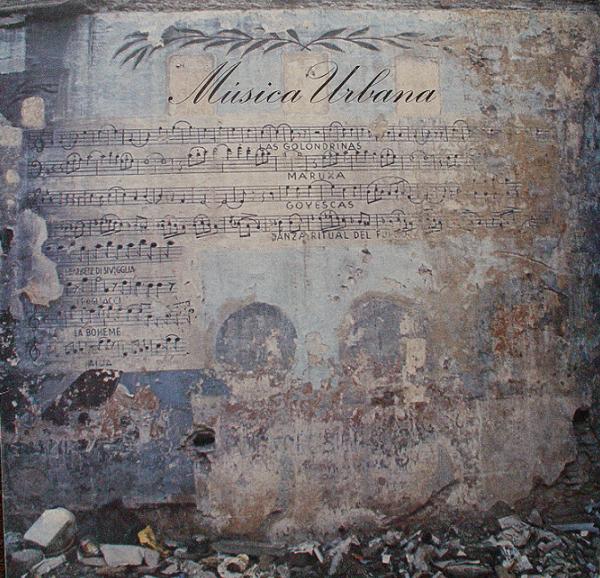
Musica Urbana - "Musica Urbana" [1975] @ 192-vinyl rip (Spanish Jazz Fusion)

It was long ago that a usually reliable written source made me aware of the past existence of a "left-of-center" Spanish rock group called Musica Urbana: a quartet, active in the second half of the 70s, whose musical language could maybe be defined as being contiguous to jazz-rock and whose best album was said to be the one bearing the same name, recorded and released in 1976. But I got there too late for vinyl, and I never heard about a CD re-release.

I'll immediately say that Musica Urbana is a very nice album for which it's extremely doubtful that a tag like "in the jazz-rock idiom" could be appropriate (besides its being counterproductive). I'd say there are more than a few similarities to Frank Zappa's "jazz-rock", when he was in his "funky" period (say, on albums like Roxy & Elsewhere or The Helsinki Concert: it's the line-up featuring George Duke and Ruth Underwood) - just listen to the jumpy theme of the first track here, "Agost", where keyboards are doubled by castanets (!) whose timbre immediately brings to mind Zappa's use of marimba. But there are also traces of Hatfield And The North - in their jazz mode, and in their more intricate moments penned by Dave Stewart (here refer to tracks Font and Caramels De Mel). Funny to notice how a group so obviously influenced by Hatfield And The North appears in some moments to predate National Health.

(If I emphasize those similarities it's not in order to diminish Musica Urbana's achievements, but to avoid those exaggerated expectations originated by announcements such as "Here for you is the (re)discovery of a revolutionary idiom that had sadly been forgotten!", those kinds of expectations leading inevitably to a let-down. This is a very good record that doesn't need any hard sell.) Complex music, yes, but never "difficult". Intricate development and orchestrations = we welcome the limpid recording. Most compositions are by Joan Albert Amargós, who's also at center stage instrumentally: many keyboards (Steinway acoustic piano, Fender electric piano, Hohner Clavinet, Mini-Moog) and wind instruments (soprano sax, clarinet, flute, trombone). (What's a "xoulet i violins Logan"? Maybe the "violin keyboard" once made by Logan?) We also have inventive and precise drummer and percussionist Salvador Font making a nice team with bass player Carles Benavent. Not too easy to notice at first, guitarist Lluís Cabanach's work is very good. We also have those castanets by Aurora Amargós and various keyboards by Lucky Guri.

Complex music, yes, the compositions being the fruit of a long work; intricate but extremely logical developments, many themes. All qualities that match very well with a kind of "simplicity" that sounds folk-related.

I really hope that, besides being a welcome addition to the record collections of those already aware, this album is a first step to the (re)discovery of a big slice of European Rock Music that today is totally forgotten (say, from ZNR's Barricade 3 to Face Aux Elements Dechaines by Etron Fou Leloublan).

Highly Recommended!

-- review by Beppe Colli @ http://www.cloudsandclocks.net

Keep Listening!!!!


http://tinyurl.com/s5ojz

Zazou Bikaye - Guilty! [1989] @256 (Excellent excursion into the afroelectroacid realm)


Well… I refuse to post only prog so… here I go with this one.

Hector Zazou was born in Algeria, land of Rai and crossroads of Europe and Islam. At this point we must make very clear that his musical influences are vast and incredibly diverse. Opera, Techno pop, dark wave, Chamber Rock, Robert Wyatt, pop... He even had had a brief Rock In Opposition link. His first duo, ZNR, has two albums of Satie-esque moog/rhodes/drum machine pop

Later he worked with la crème of his generation: Dead Can Dance, Jon Hassell, David Sylvian, John Cale, Anneli Drecker, Bjork and many others. Zazou is well known for his ambitious projects. His album Songs from the Cold Seas is an essential masterpiece, an album not to be missed by anyone who might think himself as a modern music connoisseur and collector.

Other important experiments done by Mr Zazou are Geologies and Geographies, or Les Nouvelles Polyphonies Corses, three quasi academic works that helped to consolidate him as one of the kings of that nebulous limbo between the classical and the popular, the modern and the very antique, the brain and the heart

For some Hector Zazou is what Eno would have been if Eno have had had a formal musical learning. This conclusion doesn’t try to say anything bad about Eno. It just states that Zazou is obviously influencde by the former, plus year academic learning.

As a matter of fact, the influence of Eno is easily noted in Guilty! The album he released with the Zairian singer Bony Bikaye. An album that draws many similarities to My Life in the Bush of Ghosts the seminal work that Eno and Byrne published in 1980.
Guilty! can also be framed in the World Music picture, only that this time the electronic arrangements make things rather unclear. They did not pretend to recreate or twist african or middle eastern music, they just played it as they felt it. Bikaye sang with his heart, not trying to fool us with fake African chanting or pseudo ritual outbursts. Zazou put here great music, Bikaye gave us a ton of honesty. And they were not afraid to the fact that people could actually dance to the music they did.

The result however, danceable or not is eerie and somewhat alien. It is true that songs like Kinshasa translates Africa to the West, but it is also true that their version of It’s a man’s man’s man’s world (original by James Brown a soul classic and surely one of the best songs ever) brings american soul back to a future Africa.

They surely knew how to give a surprisingly turn of the screw.
Do not expect guitar riffs or solos here.
Mellotron? What is that?

Keep Listening!!!

http://rapidshare.de/files/22384525/Hector_Zazou_-_Bony_Bikaye___Guilty_.rar.html

Pork Pie - Transitory [1974] @ 320 (jazz fusion)

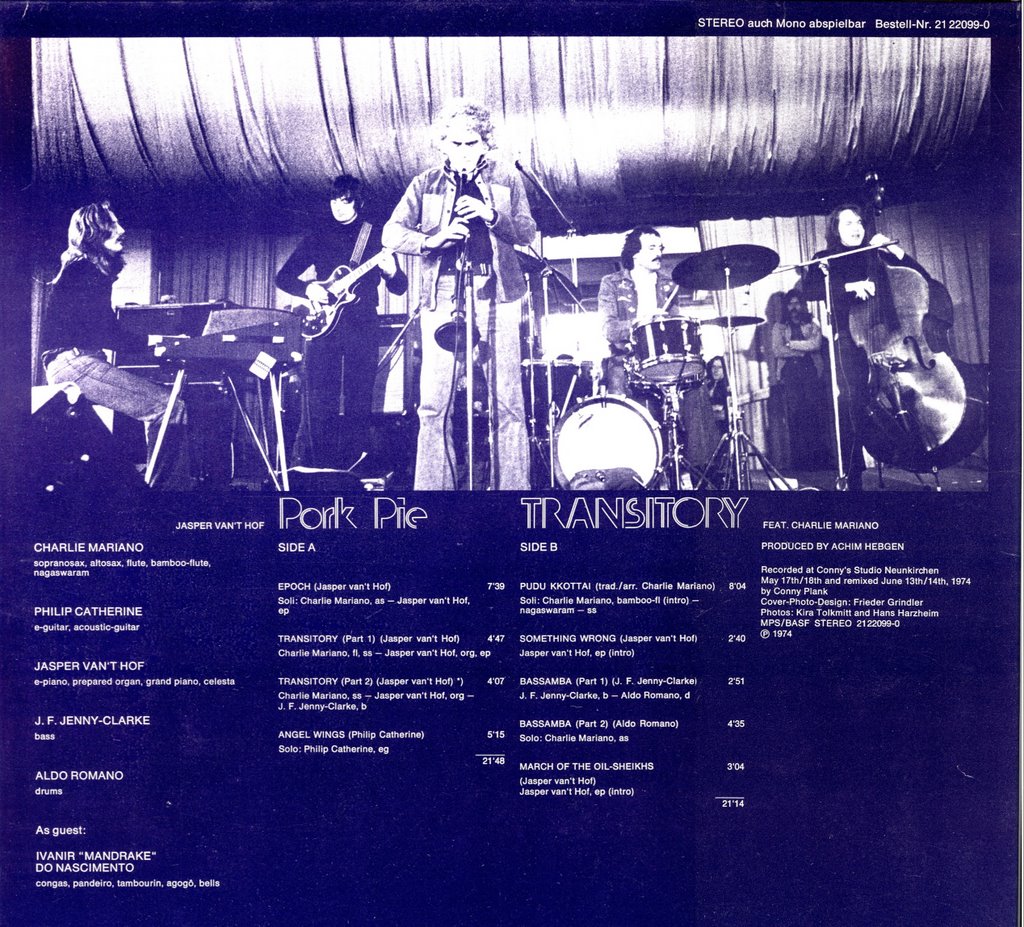
Pork Pie was the fusion band of keyboardist Jasper van't Hof during the 70's with this being the best of their output. This brand of fusion comes with a jazz bent, with the band featuring Charlie Mariano on reeds, J. F. Jenny Clarke on bass and the recently departed Aldo Romano on drums.

The rock element comes from the guitar of Philip Catherine, he of Focus fame.

You cannot review this band without a comment about Mariano. A true innovator, he played with amoung others, Charles Mingus before moving to Europe, where he has lived for several decades. His music has encompassed straight jazz, fusion, oriental and he has experimented with a large range of alternative instruments. Here he displays complete command of the nagaswaram, the instrument you can see him playing on the back cover. Most of all he is a lyrical and attractive player.

Not much needs to be said about Catherine, a brilliant guitarist, but I think more at home here in a jazz setting than in a true rock band. Let's face it, Focus were not very "rock". To amplify my point, listen also to Michael Gibb's "The Only Chrome Waterfall Orchestra"

I have great respect for Romano, more than a percussionist, a fine composer and band leader in his own right. He went on to make many good, but totally overlooked albums, including "Alma Latina", 1983, with Catherine. With the ever present Jenny-Clark on bass, they make a formidible rhythm section.

It must be said that of all the fusion bands that plied their trade in the 70's this is one of the very best and this is one excellent album, with its mix of ambient, jazz with some eastern influences, courtesy of Mariano.


Charlie Mariano - Reeds, flutes
Philip Catherine - Guitars
Jasper van't Hof - Keyboards
J.F. Jenny-Clarke - Bass
Aldo Romano - Drums
Ivanir Do Nascimento - Percussion

Keep Listening!!!


http://rapidshare.de/files/22423009/Pork_Pie_-_Transitory__1974.rar.html

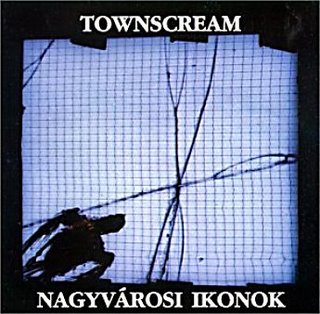
Townscream - "Nagyvárosi Ikonok" [1997] @ 192 (Keyboard Driven Hungarian Prog)

I gotta say, the opening to this album is one of the most exciting I've ever heard. I mean, its just an explosion of keyboards and locked-in, thundering drum patterns, with some killer electronic sample cycling over the riff, driving home the groove. Phenomenal. Townscream is the project of former After Crying keyboardist Csaba Vedres, and there is an expectedly significant carry over from his former band, Vedres being the main composer during his stay. Considering that After Crying's period with Vedres at the helm was their most arguably their most successful, fans of their early work would probably want to follow him to Townscream before exploring the more inconsistent later After Crying albums. Nagyvárosi Ikonok received a ton of hype upon its release, and as usual there's been backlash, but I think now that the dust has settled, it still stands as a great album. For those familiar with After Crying's work, Townscream is slightly heavier and more aggressive, but also manages to work in that lush, classically inspired After Crying feel at points. In some ways they are even more varied, which may contribute to complaints concerning the discontinuity of the album. Even those unfamiliar with early After Crying should make an effort to pursue Townscream, as I think the album stands up very well on its own, and would possibly halt the unconscious desire to compare the two groups.

As is usually the case with Csaba Vedres, his biggest inspirations seem to be King Crimson and Emerson, Lake & Palmer, as well as his incorporation of a dark classical feel. The album moves through a number of different phases, which sort of caused me to lose interest at various points at first, focusing on one chunk of pieces and then sort of zoning out. However, repeated listenings have allowed the whole thing to sink in and make sense. The title suite is an unequivocal masterpiece. The aforementioned opening is utterly fantastic, but the piece doesn't really let down as far as quality goes, though certainly the intensity is varied throughout. It incorporates a number of beautiful piano solos, as well as a drum solo that uses sampled rhythms to great effect before exploding into the suite's shuddering climax. "Minden Nap" is the first track that really evokes early After Crying, an extremely beautiful and melodic piece featuring vocals, acoustic guitar and flute.

The next section of the album was originally what sort of lost me. "A Lazarus-Ból" through "Koldus" are extremely ELP-ish, and very bombastic. However, the aggressive cello and horn parts that overlay the keyboard pyrotechnics really sunk in over time, and I've gotten to thoroughly enjoy this section of the album as well, reminding me that there's really nothing wrong with ELP bombast, as long as its done well. The final section of the album starts out very slow, as both the 9th and 10th tracks occupy around 10 minutes of near dead air, consisting of minimalistic chanting and sound effects. However, patience pays off as the closing set of tunes proves utterly fantastic, rivalling the best work of After Crying, and in very much the same style. Stunning symphonic progressive with an overt classical air and with all the flourish and grand instrumentation that we've come to expect from such large scale Vedres compositions. Nagyvárosi Ikonok requires some persistent listening for it to all fall together. It does drag at points, and the project could have used some tightening up, but the album still holds up with any of the After Crying albums. A great example of original and inspired symphonic progressive for the 90s. Here's to hoping we'll see some more out of Townscream in the future, though Vedres has been apparently concentrating on solo piano work as of late. Ah well, the next album could have been a real classic.

Highly Recommended!

-- reviewed by Greg Northrup @ http://www.progweed.net

Track Listing:
1. Nagyvárosi Ikonok I.
2. Nagyvárosi Ikonok II.
3. Nagyvárosi Ikonok III.
4. Nagyvárosi Ikonok IV.
5. Minden Nap
6. A Lazarus-Ból
7. Fekete Hangulat
8. Koldus
9. Íme, Hát Megleltem Hazámat
10. Így Szólt a Madár
11. Hajnali Enek
12. Alászálla a Poklokra
13. Az Utolsó Ikon

Personnel:
Vedres Csaba - Keyboards, Synthesizers
Ács Péter - Bass
Baross Gábor - Drums
Gál Béla - Cello, Synthesizers

Keep Listening!!!!

http://rapidshare.de/files/22333383/Nagyvarosi_Ikonok_1.zip.html

Soft Machine - "Seven" [1974] @ 192 (British Jazz Fusion)


There was a request for Soft Machine - Seven a little while back, and I had found a link for it from the Kukopolis blog (kukopolis.blogspot.com). Unfortunately, that rip was @ 128 kbps, so I tracked down a better rip @ 192 kbps, so here it is... enjoy!

By this album Soft Machine had mutated from a psychedelic acid rock/jazz combo into a disciplined British jazz fusion combo, with only keyboard player Mike Ratledge being an original member. But they're damn good: sax/piano player Karl Jenkins is bursting with melodic ideas, writing more than half the record and tossing off elaborate riffs ("Block"); drummer John Marshall (an associate of Jack Bruce) is extraordinarily dextrous, inviting comparisons with Bill Bruford; and bassist Roy Babbington holds down some really demanding lines and gets in a startling bowed standup bass solo ("Down The Road"). Meanwhile, Ratledge delivers refined, tasteful synthesizer voicings, and he orchestrates a thunderous suite that let's everyone show off impressively ("Day's Eye/Bone Fire/Tarabos") - although Jenkins' sophisticated tunes almost steal the show (the stately, uplifting "Penny Hitch"). The group had long since abandoned vocals. But complex overdubs and frequent stylistic shifts keep it interesting, from Marshall's spacey Eastern percussion piece "D.I.S." to Jenkins' romantic keyboard solo "Carol Ann." With key compositions like "Nettle Bed" and "Block" scattered everywhere, the only expendable tracks are the watery interludes "Snodland" and "The German Lesson/The French Lesson." Virtuosic and staggeringly intelligent, this is a classic example of the genre. Guitar phenom Alan Holdsworth would join the band for Bundles (1975).

reviewed by John Alroy @ http://www.warr.org

Line-Up:

-- Roy Babbington - acoustic & electric basses
-- Karl Jenkins - oboe, baritone & soprano saxes, recorder, electric piano
-- John Marshall - drums, percussion
-- Mike Ratledge - electric piano, organ, synthesizer

Keep Listening!!!!

http://rapidshare.de/files/22017376/Soft_Machine_-_Seven__1974_.zip.html

Back Door - "Back Door" [1972] var btr (British Blues Jazz Rock)


There was a request for this one and who am I to argue.
This is truely a legendary album. Three great musicians with there own take on the Blues, Ron Aspery on saxes, Tony Hicks on drums and a bass player. And what a bass player. Colin Hodgkinson is a revelation, a true original and it is safe to say that he is up there with Jaco Pastorious as one of the great electric bass players. Just listen to this and the follow-up "8th Street Nites " [1973] to be convinced.
It was because the band had no keyboard or rhythm guitar that Hodgkinson felt the need to take on the role of both bass and rhythm. He uses chords and fast lead lines to fill out these short, gritty tunes and he does it perfectly.
That's not the only reason this is such a good album. Aspery is a tough saxophonist with real jazz credentials and Hicks is a free and inventive drummer. All in all, the complete package.
The album was roughly recorded and independently released. It soon generated a real buzz and picked major label backing. The reviews were universally glowing focusing on the lead and rhythm bass of Hodgkinson and the supburb musicianship of Aspery and Hicks and this mix of blues with a rock feel, but jazzy overtones.
You should do yourself a favour and get this masterpiece.

32 / 20 Blues

Keep Listening!


http://rapidshare.de/files/21997195/Back_Door_-_Back_Door__1972.rar.html

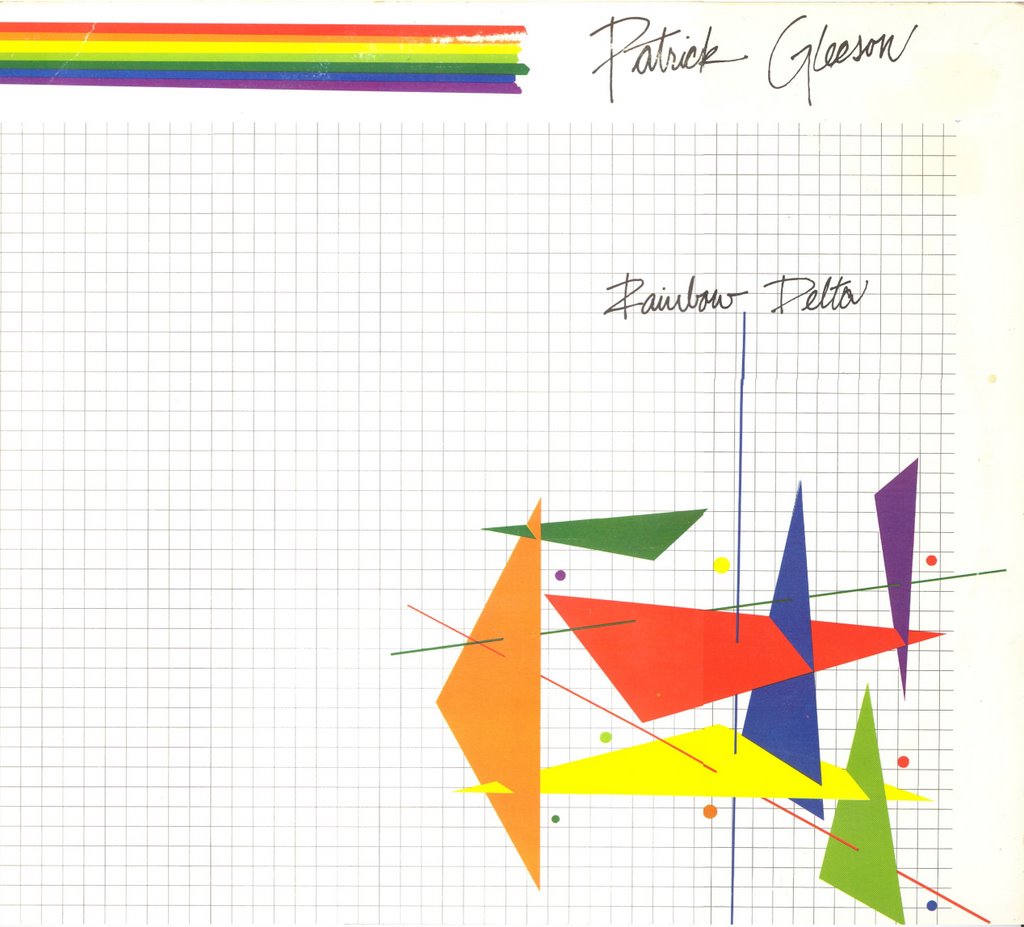
Pat Gleeson - Rainbow Delta [1980] @ 320 (electronic jazz)


Dr Pat Gleeson was the brains behind the electronics in the Herbie Hancock's Mwandishi bands, the pioneering electronic / fusion band of the mid 1970's. See Eddie Henderson elsewhere in this blog.

It was his contributions that gave these albums there spacy feel and made them all classics.

This as a solo album of electronic instruments only. It was not until listening to it again that I realized that it really is a fine album in its own right. I can't really say much more about this album, as I know very little myself. A search of the the reveals little as well, just 3 albums released in 30 odd years and an album with fellow Mwandish, Bennie Maupin.

An interesting footnote to the great Hancock fusion band of the mid 1970's

Keep Listening!

http://rapidshare.de/files/21988674/Pat_Gleeson_-_Rainbow_Delta__1980.zip.htm